WordPress SEO services run $1,348 to $3,209 a month on average across freelancers and agencies, or a fixed-scope audit and fix project instead of an open retainer. The work covers keyword research, on-page optimization, and a technical audit. It also covers WordPress-specific configuration most generic SEO providers skip entirely, since WordPress's plugin layer creates SEO risks no other platform has in quite the same way. Here is what a real service actually includes, what it costs from real client-review data, and how to tell one from a reseller reading off a generic checklist. If you are specifically looking for a WordPress SEO agency that quotes a fixed number rather than an open-ended retainer, the fixed-scope model below is usually the cheaper path.
What's Actually Included in WordPress SEO Services
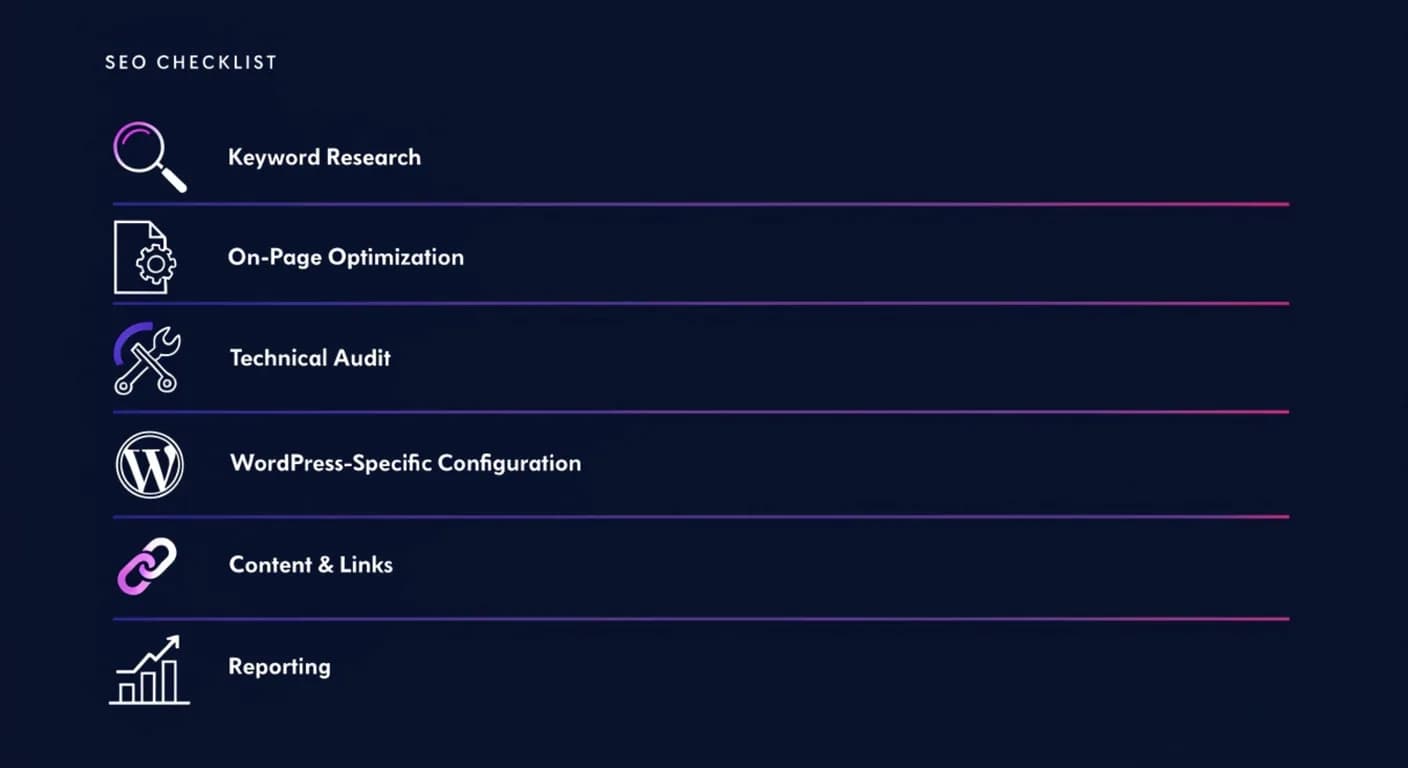
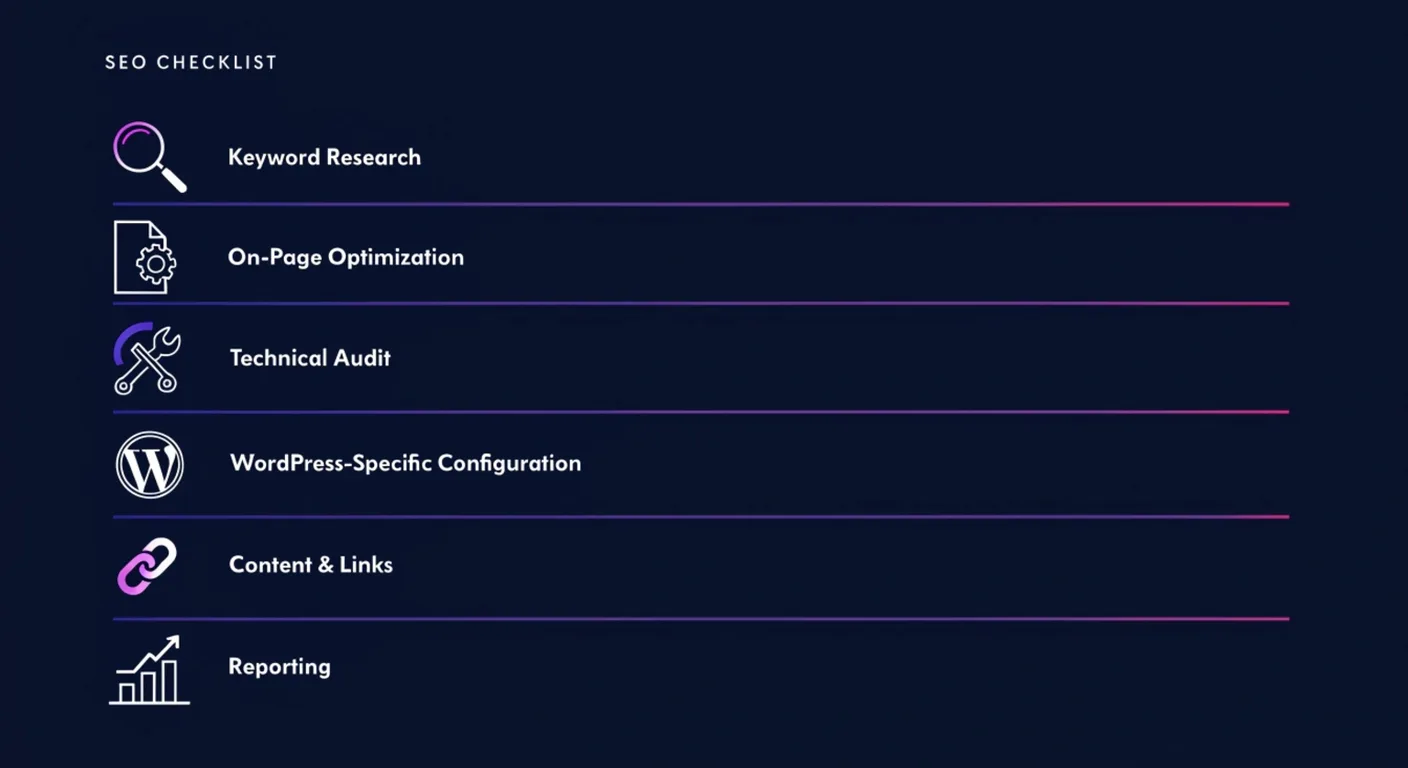
Strip away the marketing language. A legitimate WordPress SEO service is built around the same core deliverables every time, just adjusted for the size of the site.
- Keyword research. A real list of terms your customers actually search, mapped to specific pages, not a generic industry list reused across every client.
- On-page optimization. Titles, meta descriptions, heading structure, and internal links, set up through the SEO plugin your site already runs rather than hand-coded around it.
- A technical audit. Crawlability, indexation, site speed, and Core Web Vitals, since none of the on-page work matters if Google cannot crawl or load the site properly.
- WordPress-specific configuration. Permalink structure, XML sitemap setup, schema markup through the plugin, and a check for plugin conflicts that quietly break SEO output, a category of problem that simply does not exist on a platform without a plugin ecosystem.
- Content strategy and link building. Ongoing work for retainer-based plans, aimed at pages that can realistically rank rather than every page on the site equally.
- Reporting. Rankings, traffic, and what changed that month, in plain language rather than a dashboard export nobody reads.
A provider that cannot name which of these six is actually included in your quote has not scoped the work. That is the single fastest way to separate a real service from a reseller.
What to Look for in an SEO Expert for WordPress
Not every SEO expert who claims WordPress experience has actually built a WordPress-native workflow. Four concrete questions separate the two. What plugin do they configure by default, and why, rather than a vague "we handle the technical side"? Can they name one specific plugin or theme conflict they diagnosed and fixed, since anyone who has done this work for real has a story like that? Do they audit before quoting, since a number given before anyone looked at your actual site is a guess, not a scope? And what changes in their approach on a WooCommerce store versus a brochure site, since a checkout carries SEO and technical risk a content page does not?
Someone who has actually built this workflow before answers all four without hesitation. General SEO theory with "and we use WordPress plugins for that" bolted on usually cannot.
Why WordPress Needs Its Own SEO Approach
WordPress powers 40.7% of all websites according to W3Techs. Every one of them runs on the same three-layer structure: core, a theme, and a stack of plugins. Generic SEO advice treats a site as one thing. WordPress SEO has to account for all three layers separately, because each one can quietly work against the others. A plugin update can silently strip schema markup. An unrelated theme change can break the heading hierarchy an SEO audit just fixed. And a caching plugin can serve Google a stale, unoptimized version of a page that looks fine to a human visitor.
None of this is a WordPress weakness. It is the direct cost of the flexibility that makes WordPress the most widely used platform on the internet. A WordPress SEO specialist's job is knowing where that flexibility creates risk. A generic consultant used to a locked-down platform would never think to check for it.
WordPress.org vs WordPress.com: Why It Changes What SEO Work Is Possible
This distinction trips up more buyers than any other on this topic. It directly limits what an SEO service can actually do. WordPress.org is the free, self-hosted software. It allows full plugin access, including Yoast or Rank Math with every feature unlocked. WordPress.com is a hosted service instead. Its lower, cheaper tiers restrict or block plugin installation entirely. A restricted WordPress.com plan cannot deliver schema markup, advanced redirect management, or several other items in the standard deliverables list above. Skill does not fix that; the platform itself blocks it. Confirming which version a site runs on is one of the first things a real audit checks, before anything gets quoted.
Common WordPress SEO Mistakes That Cost Rankings
A handful of mistakes show up repeatedly across WordPress sites that were technically "optimized" and still underperform.
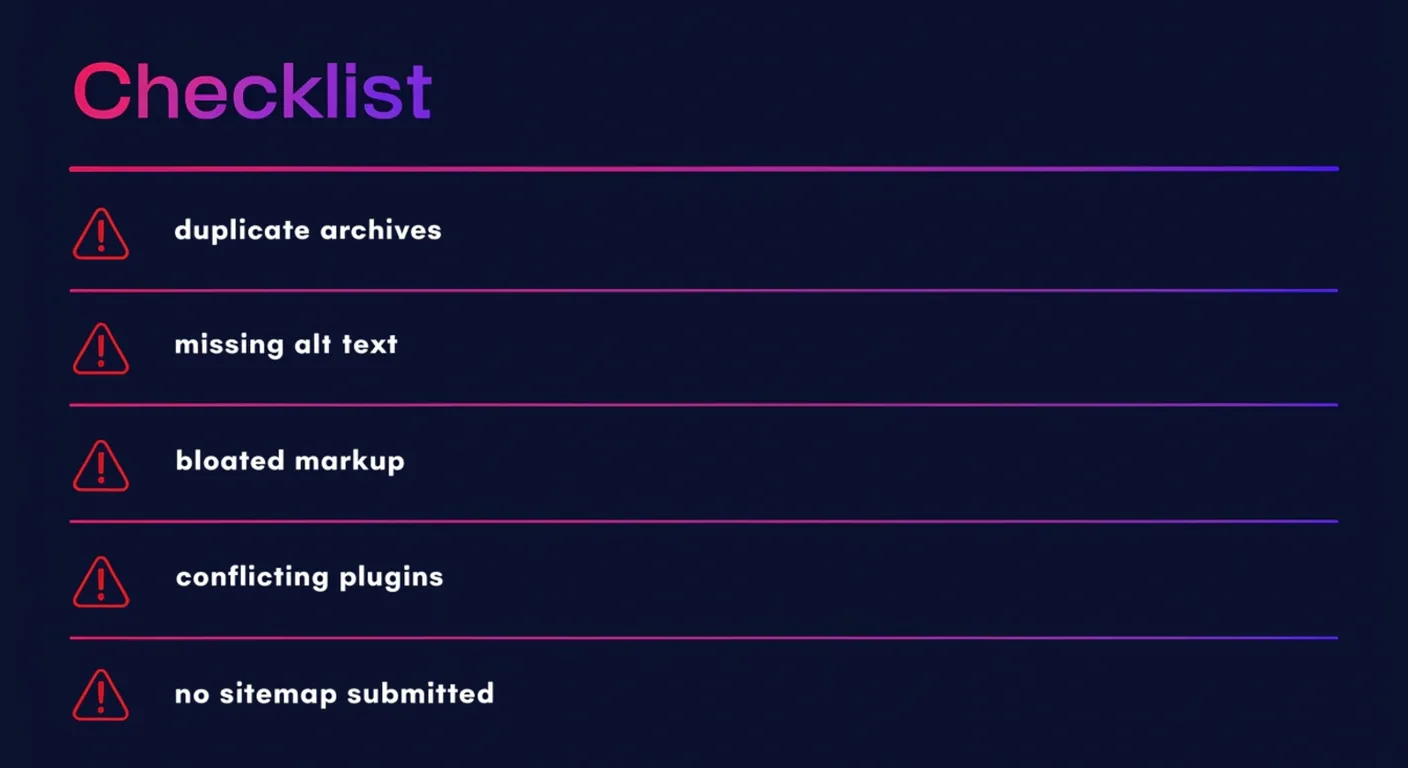
- Duplicate content from category and tag archives. WordPress generates an archive page for every category and tag automatically. Left unmanaged, these thin, overlapping pages compete with the actual content for the same rankings.
- Images with no alt text and no compression. Missing alt text is a lost ranking signal on its own. An uncompressed image gallery is one of the most common causes of a failing Largest Contentful Paint score, which Google's own Core Web Vitals thresholds treat as a ranking-relevant page-experience signal. Our Core Web Vitals guide covers all three thresholds and how to fix each one.
- A page builder generating bloated, non-semantic markup. Heading tags used for visual size rather than actual document structure confuse both search engines and screen readers about what the page is actually about.
- Two SEO plugins installed at once. Yoast and Rank Math both try to control the same meta tags and sitemap output. Running both simultaneously usually produces conflicting, unpredictable results rather than double the coverage.
- No XML sitemap submitted to Search Console. The plugin generates one automatically, but nobody ever tells Google where it is, which slows down how quickly new content gets discovered and indexed.
WordPress SEO Services Cost: Real Numbers, Not Vague Ranges
Every provider quotes a slightly different number, because scope varies enormously between a five-page brochure site and a 200-page catalogue. HigherVisibility's 2026 SEO pricing survey puts the average monthly retainer at $1,348 for freelancers and $3,209 for agencies. Clutch's own client-review data lands close to the agency figure, at $3,199 a month on average. Most SEO projects it tracks still cost under $10,000 in total. The average full project across every scope it tracks is $37,158.
| Pricing model | Typical range | Best for |
|---|---|---|
| Monthly retainer | $1,348 to $3,209/month average | Ongoing content, links, and reporting |
| Fixed-scope project | Under $10,000 for most projects Clutch tracks | An audit plus named fixes, no open-ended billing |
| Hourly consulting | $100 to $149/hour, per Clutch's own rate data | Specific problems, second opinions, one-off audits |
Our own SEO and speed optimization service runs the fixed-scope model rather than a retainer: an audit first, then a fixed price against the specific findings, starting at $799 for a small site. You know what is being fixed and what it costs before anything starts, rather than paying a monthly number and hoping the work behind it justifies the invoice. For the same real-numbers comparison applied to SEO work generally, not just the WordPress-specific version, see our SEO cost breakdown.
Yoast vs Rank Math: The Two Plugins Behind Most WordPress SEO Work
Nearly every WordPress SEO service runs through one of two plugins. Yoast SEO was the long-standing default, with a simple traffic-light readability and SEO score and a long track record. Rank Math launched later and built in Google Search Console integration and a more detailed scoring system directly into its dashboard. Both plugins handle the core job well: titles, meta descriptions, sitemaps, and schema. Two WordPress SEO specialists rarely disagree on which plugin to use. What separates good work from bad is whether they configure it correctly for your specific site, since either plugin badly configured produces the same generic, unhelpful output.
Do You Actually Need a WordPress SEO Specialist?
Professional WordPress SEO makes sense in a specific set of situations, not automatically for every site. A few situations make it worth paying for. Your site is not ranking for terms your actual customers search. Traffic arrives but does not convert. You are launching or redesigning and want the technical foundation built correctly from day one instead of patched in afterward. Or every rival in your market is already investing seriously in their own SEO. It is worth skipping, at least for now, on a very small site with light competition where the basics, covered in our local SEO checklist, are enough to hold your own.
WordPress SEO Specialist vs a General SEO Consultant: Is There a Difference?
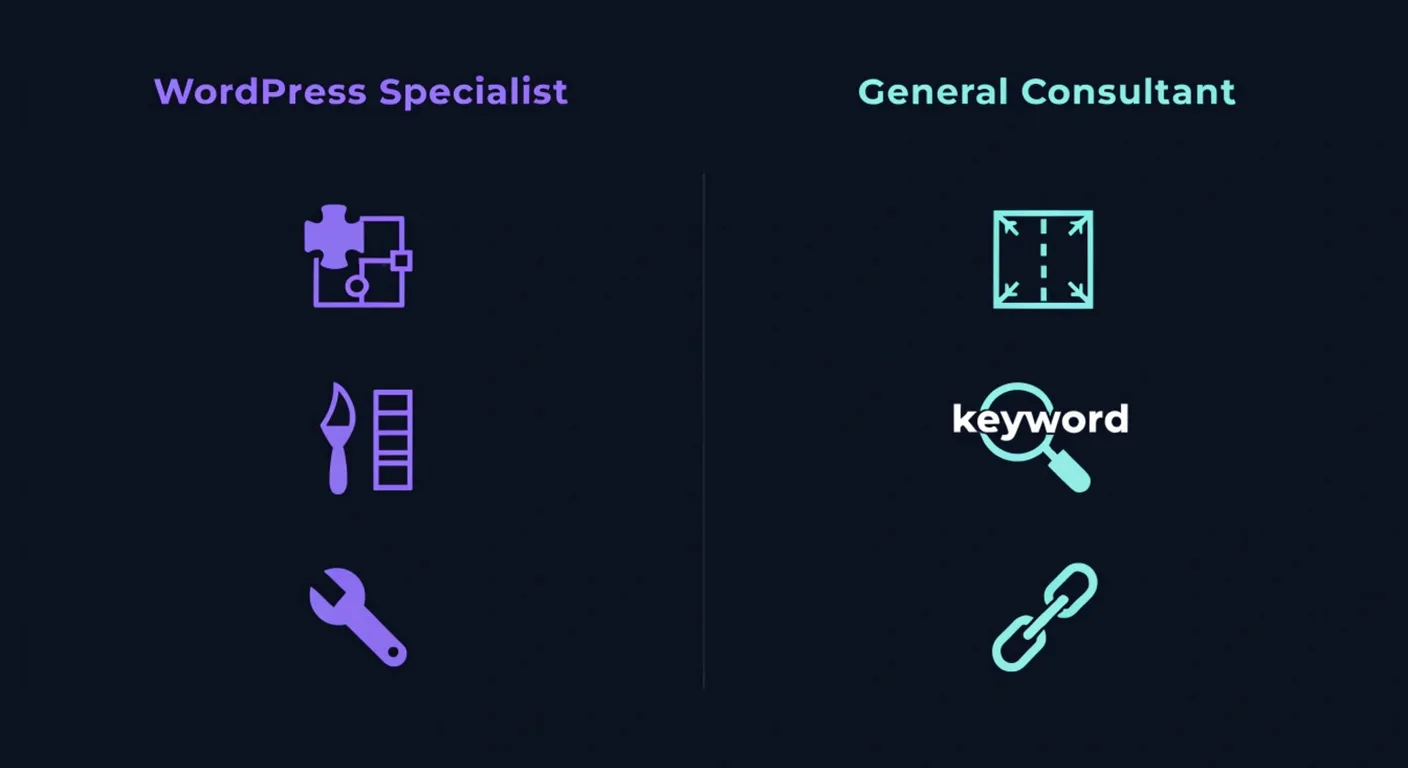
Genuinely, yes. General SEO consultants know strategy: keyword targeting, content planning, link building, measurement. WordPress specialists know all of that too. They also know the platform-specific failure points: which plugin combinations conflict, how a page builder's markup differs from clean semantic HTML, and how a theme update can silently undo months of on-page work. Hiring a generalist for a WordPress site usually still works, provided they either know the platform already or bring in someone who does for the technical implementation. The reverse fit is worse: hiring a WordPress specialist for a site on a different platform means the platform-specific knowledge simply does not transfer.
How Long Before WordPress SEO Actually Shows Results?
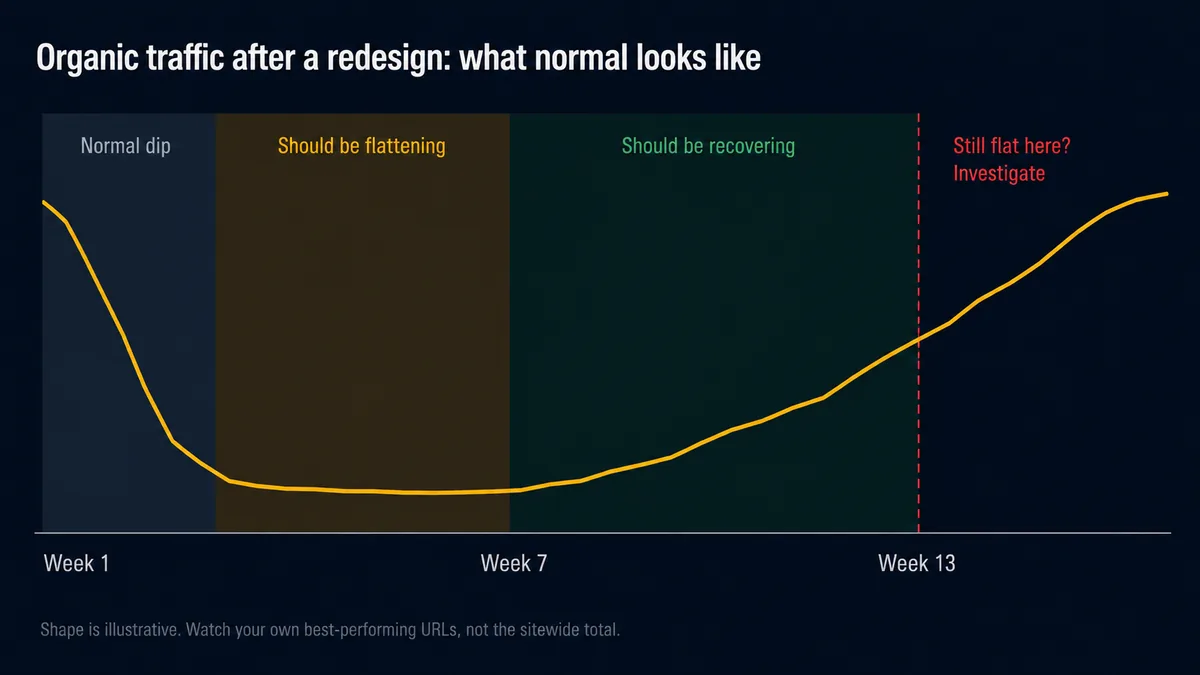
The honest answer is a range, because it depends on how competitive the target keywords are and how much technical debt the site is starting from. Ahrefs' survey of 3,680 SEO practitioners puts meaningful ranking and traffic growth at three to six months for most sites, with genuinely competitive keywords taking a year or more. A newer domain takes longer than an established one, since Google spends time working out where a new site belongs before ranking it prominently for anything. Technical fixes, a broken sitemap or a missing canonical tag, can move some numbers within weeks. Content and authority-driven rankings move on the slower timeline.
WooCommerce SEO: What Changes for a Store
A WordPress store running WooCommerce carries SEO risks a brochure site does not. Duplicate product URLs from filter and variant combinations dilute ranking signals across what should be one page. Thin, templated product descriptions, especially ones pulled straight from a manufacturer's feed, read as duplicate content across dozens of competing stores. Category pages frequently ship with no unique copy at all, just a product grid, which gives search engines nothing to understand the page by. A WordPress SEO service scoped for a WooCommerce store needs to include product schema, category-page content, and a URL structure that survives a growing catalogue without generating duplicate paths.
How to Check Whether Your Current WordPress SEO Is Actually Working
Before hiring anyone, or after paying for months of a retainer, a few real checks confirm whether the work is doing anything. Search Console's Performance report shows whether impressions and average position are trending in the right direction over the last three months, not just the last week. The Pages report under Indexing confirms whether new content is actually getting indexed, since a page that never gets indexed cannot rank regardless of how well it is written. A quick site search, site:yourdomain.com in Google, gives a rough read on how many pages are in the index at all. None of these checks require paying for a tool. They just require someone to actually look, which is the step a vague monthly report is designed to let you skip.
Red Flags in WordPress SEO Pricing and Pitches
A few patterns show up repeatedly among companies not worth hiring. Nobody controls Google's algorithm, so a guaranteed page-one ranking is not something anyone can honestly promise. Watch for a price with no named deliverables attached, just "SEO services" as a single line item. That usually means the scope gets decided after you have already signed. Not being able to explain what is specifically wrong with your site right now, before quoting a number, means nobody has actually looked at it yet. And a monthly retainer with no defined end point or success metric is the easiest way for a real problem to become an indefinite invoice.
DIY, Freelancer, or Agency: What Each Path Actually Buys
Four real paths exist, and each fits a different situation. Here is what each one realistically costs and who it actually suits. One exception worth naming up front: a regulated practice buys this differently, and healthcare and med spa sites carry compliance work that sits outside a standard SEO scope.
| Path | Realistic cost | Best for |
|---|---|---|
| DIY (Yoast or Rank Math yourself) | $0 to $200/year in plugin costs | A small site with light local competition |
| Freelancer | $1,348/mo average, per HigherVisibility | A single site needing ongoing, hands-on attention |
| Agency retainer | $3,209/mo average, per HigherVisibility | Multi-location or competitive markets needing a full team |
| Fixed-scope audit | Under $10,000 total for most projects, per Clutch | A defined, bounded set of technical problems to fix |
None of these four is automatically the right answer. A brochure site with three local competitors rarely needs an agency retainer. Trying to rank in five cities at once, though, usually outgrows DIY no matter how many hours get put into it, simply because the scope outgrows one person's available time. SEO also sits on top of the basics: a site that is down, slow or out of date will not rank whatever the keyword work says, which is why managing the WordPress site itself comes first.
A Real WordPress SEO Result, Not a Promise
Falcon Ridge, a 55+ independent living community with three property locations, needed a custom WordPress rebuild with local SEO built in from the start rather than bolted on after launch. Organic traffic rose 285% and enquiries rose 60% once the new site was live. Carter Hearing, a hearing clinic running four locations and two mobile units, saw organic traffic rise 180% and booking enquiries rise 45% after a WordPress rebuild with the same approach. Both link the live sites, so the numbers are there to check rather than take on faith.

What We Actually Charge for WordPress SEO
Our SEO and speed optimization service starts at $799 for a fixed-scope audit and the highest-impact fixes on a small site. The full technical SEO and speed remediation tier, including local search setup, is $1,499. Larger or multi-location sites run $2,499 and up. Every tier is audit-first: you see exactly what is broken before agreeing to a number, rather than a monthly retainer billed against vague ongoing activity. If your site runs WordPress specifically, our WordPress development service builds SEO in from the first line of code rather than fixing it after launch.