
Website migration services, sometimes just called web migration services, cover four genuinely different jobs that get sold under one label: moving a site's SEO signals safely, changing content management systems, switching web hosts, and changing domains. A page or an agency that says "migration services" without naming which of these it actually does is the biggest red flag in this market. Here is what each one actually involves, what a real service includes, what it costs, and how to tell a legitimate provider from a reseller. That word has two meanings worth separating, which we do in white label web design and what a reseller actually is.
The Four Types of Website Migration
Most projects only need one or two of these, not all four at once. Knowing which type you actually need is the first real decision, since it determines the skill set, the timeline, and the risk profile.
- SEO migration. URL mapping, 301 redirects, metadata preservation, and post-launch monitoring, so existing rankings survive a redesign or restructure. See the full SEO migration checklist for the exact process.
- CMS migration. Moving content, themes, and functionality from one platform to another, WordPress to Shopify or Wix to WordPress, for example, or the other direction. A Joomla to WordPress migration is one of the more common versions of this, since Joomla sites tend to be older and harder to maintain. Since WordPress alone powers 40.7% of all websites, it is the platform most CMS migrations touch on at least one end. This is the most labour-intensive type, since content structures rarely map one to one between platforms.
- Web hosting migration. Moving files and a database to a new server while the platform and domain stay the same. See how to move WordPress to a new host for the exact process, including the three methods and the SEO risk profile.
- Domain migration. Changing the address itself. Every external backlink still points at the old domain, making this the highest-risk type, and it requires Search Console's Change of Address tool alongside a full redirect map.

What a Real Website Migration Service Includes
Strip the marketing language and a legitimate service is built around the same core deliverables, adjusted for which type of migration is actually in scope.
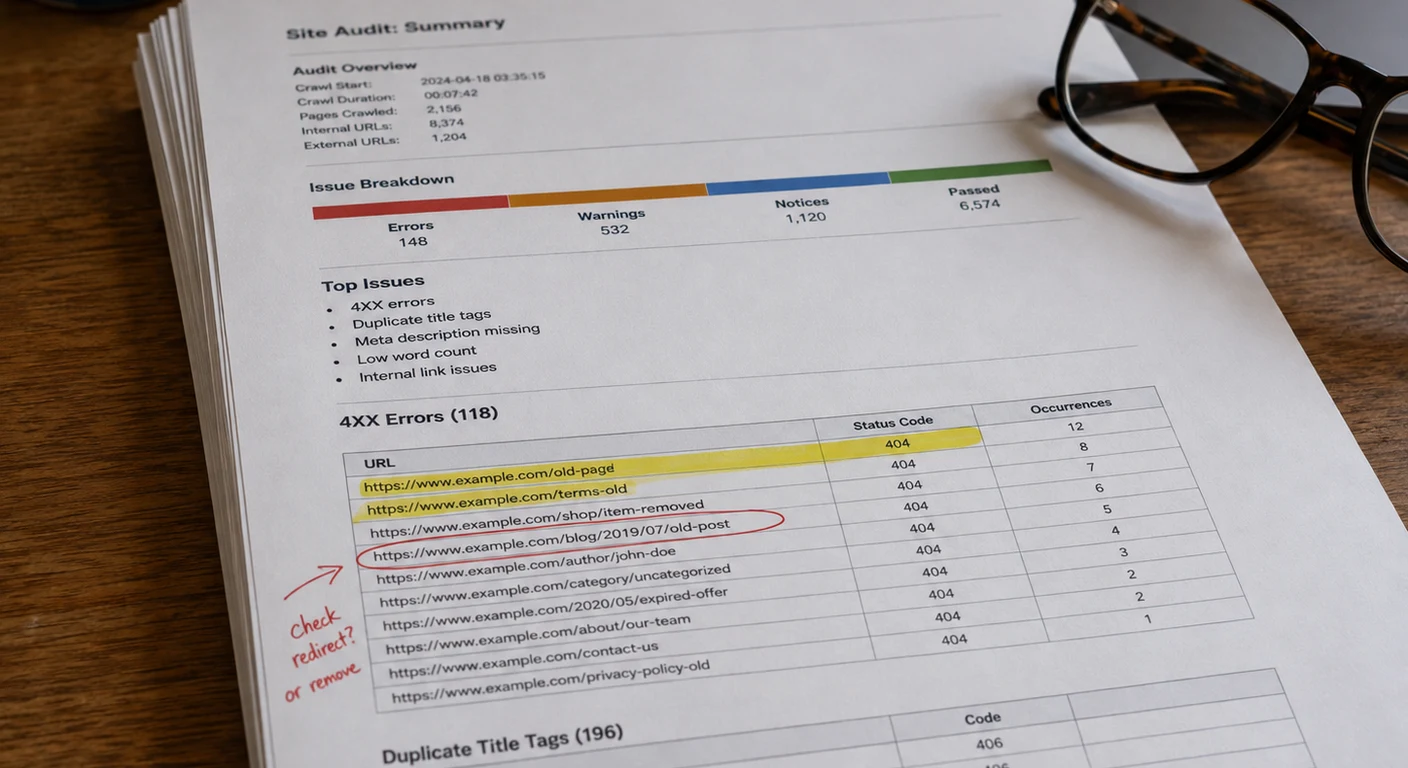
- A pre-migration audit. Full crawl of the existing site, capturing every URL, title tag, meta description, and current ranking position for high-value pages, before anything moves.
- A documented URL and redirect map. Every old URL mapped to its new destination and tested before launch, not improvised after.
- Content and functionality verification. Confirmation that everything that worked on the old site, forms, integrations, e-commerce checkout, still works on the new one.
- Post-launch monitoring. Watching Search Console and analytics for at least the first two to four weeks, since that is when redirect and indexing problems actually surface.
A company that skips the audit and monitoring stages and only handles the technical move itself is selling file transfer, not migration.
How Much Website Migration Services Cost
The website migration service cost varies enormously, because "migration" describes projects at completely different scales. A same-domain host move on a small site is a few hours of work. A full CMS change on a large e-commerce catalog is a multi-week engagement with content mapping, integration testing, and staged rollout. Anyone quoting a single flat number without first asking which type of migration you need, and how large the site is, has not actually scoped the job.
Our own pricing is published rather than hidden behind a contact form. The Professional redesign package at $1,499 includes SEO-safe migration as standard for up to 10 pages. A standalone migration engagement, no redesign, just the move, is scoped individually based on which of the four types above is involved and how large the site is. It is quoted in writing before work starts.
DIY vs Hiring a Migration Service
A small, low-traffic site with a same-domain host move is a reasonable DIY project if you are comfortable with FTP and a database. The risk and the potential cost of a mistake both scale with the site's actual value. A high-traffic site, an e-commerce catalog, or any migration involving a domain change carries enough downside that hiring it out usually costs less than the lost revenue from getting it wrong. Technical comfort, time available, and how much traffic or revenue depends on the site are the three questions worth answering honestly before deciding.

How to Choose a Website Migration Company
A few direct questions separate a real company from a reseller. Does the quote name which of the four migration types is included, or use "migration" as one vague catch-all? Is there a documented pre-migration audit and a post-launch monitoring period, or does the engagement end the moment the new site loads? Can they point to specific technical steps, redirect mapping, Search Console verification, staging tests, rather than general reassurance? Vague answers to these three questions are the clearest signal available before signing anything.
One specific pattern is worth watching for. Some agencies sell "migration" as a rebranded website-builder onboarding, where the real deliverable is a brand-new site built on their preferred platform rather than your existing content actually being moved. That can be the right call if a platform change is genuinely warranted. But it is a different project with a different risk profile than a true migration, and it should be priced and scoped as one.
What Actually Goes Wrong Without Proper Handling
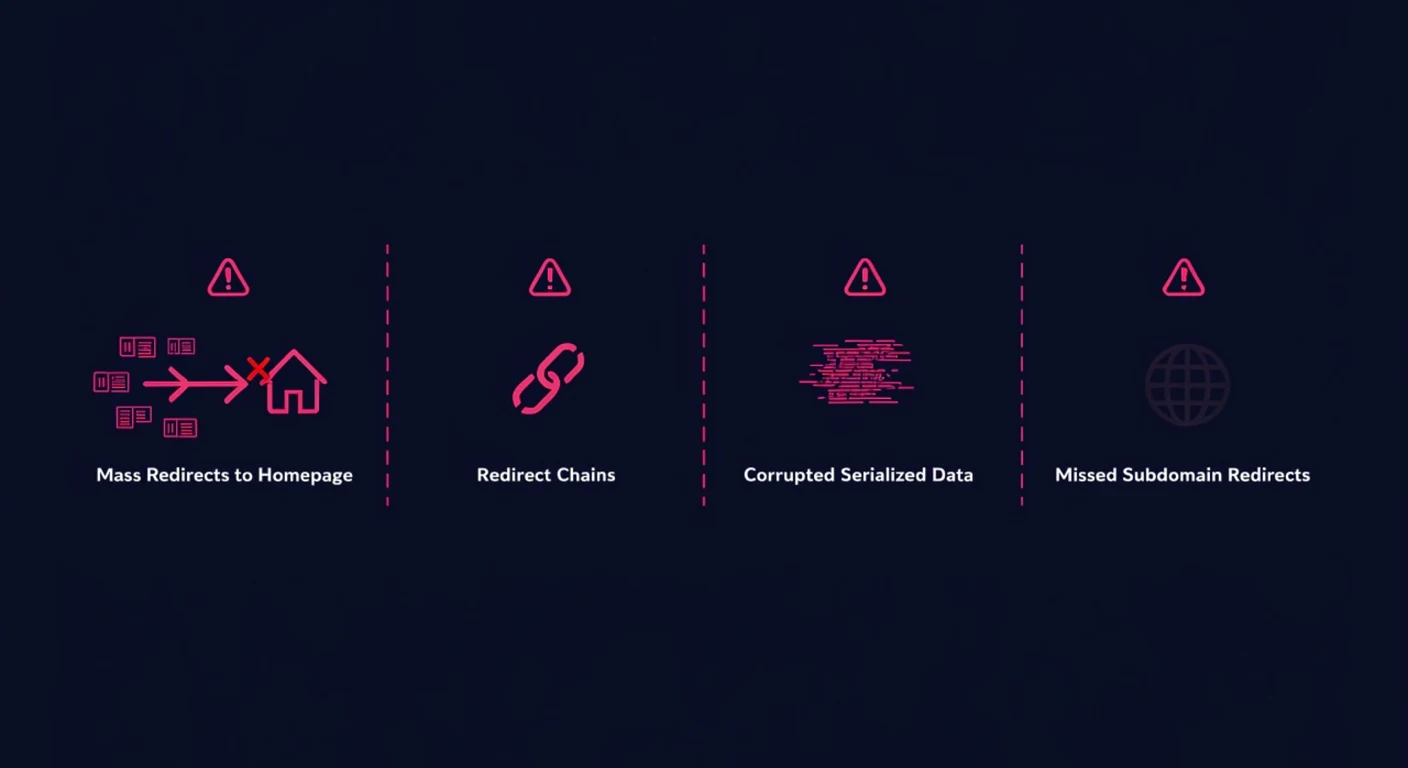
The failure modes are consistent enough across migrations to name specifically. Mass redirects to a homepage instead of matching pages, which behaves enough like the soft 404 pattern Google's own documentation warns about that the ranking authority of the old URL gets discarded rather than transferred. Redirect chains, one old URL bouncing through two or three hops before reaching its destination, that Google's own crawl-budget documentation specifically warns against, since every hop burns crawl budget and slows every real visitor down. Serialized database data, widget settings and page-builder content especially, corrupted by a plain find-and-replace that does not understand WordPress's data format. And missed subdomains or www variants left un-redirected, so a chunk of traffic keeps landing on a dead old address indefinitely.
None of these are exotic. They are the specific, well-documented mistakes a proper pre-migration audit and a tested redirect map exist to prevent. That is exactly why those two line items matter more than any other part of a migration quote.