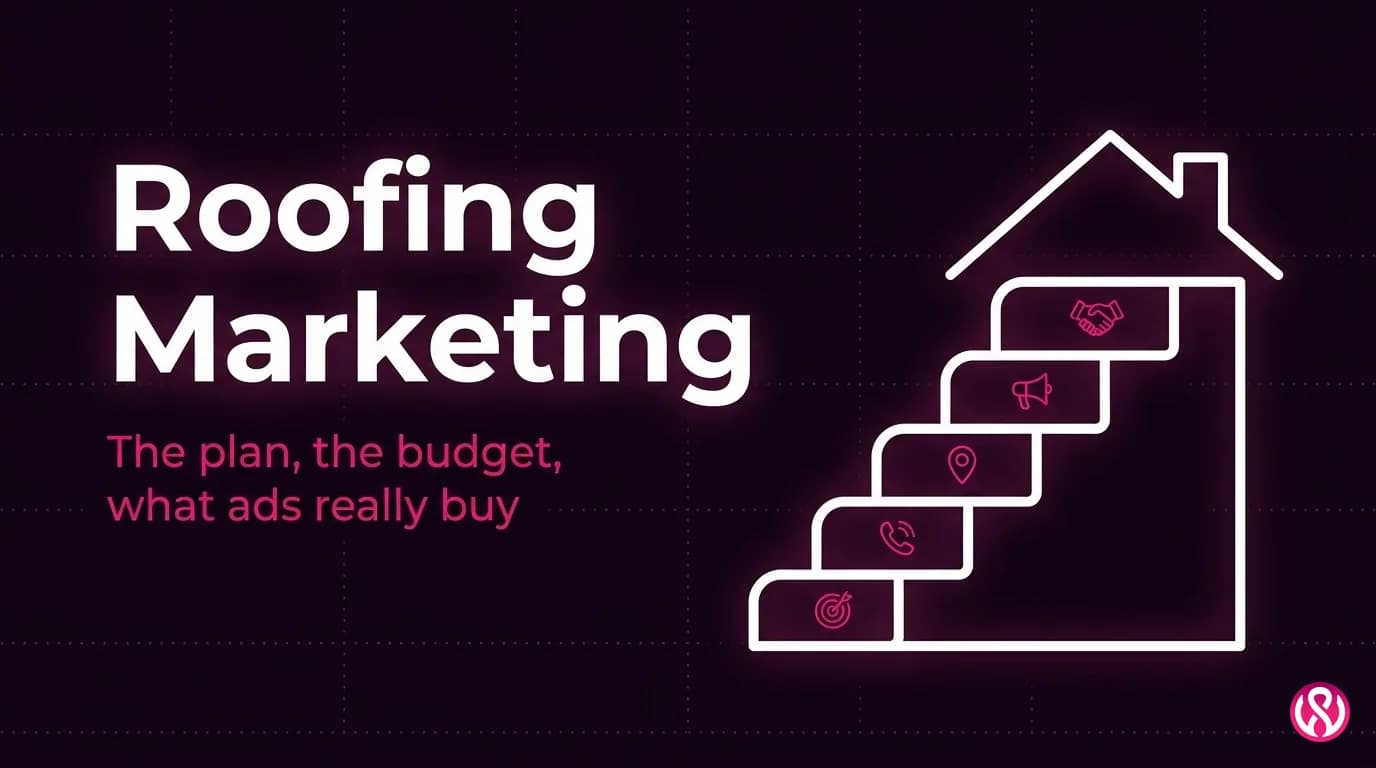
Roofing marketing is everything a roofing company does to get known, chosen and called by homeowners and property managers in its service area. For most roofers it rests on five things, in this order: a clear reason to pick you, a fast website that makes contact easy, a strong Google Business Profile with steady reviews, paid ads for the busy weeks, and offline work like yard signs and referrals that keeps your name on every street you roof.
This guide turns that list into a roofing marketing plan: what to do first, what to spend, what a marketing budget actually buys at today’s roofing ad prices, and how to tell if it is working. It covers digital marketing for roofers and the offline side, because the two work together. People search for it as roofing marketing, marketing for roofing companies, marketing for roofing contractors, how to market a roofing company, roofing advertising, roofing marketing ideas and roofing marketing strategies. The answer is the same plan.
Roofer marketing, roofing contractor marketing, roofing company marketing, roofing business marketing and plain roof marketing all mean this too, as do the digital versions: roofing digital marketing, roofer digital marketing, internet marketing for roofers, online marketing for roofers, digital marketing for roofing contractors and digital marketing for roofing companies. Treat this page as a marketing guide for roofing contractors who want to grow a roofing business without guessing where the money goes.
What is roofing marketing?
Roofing marketing is the work that makes you the roofer people call. The work puts your company in front of homeowners before, during and after they need a roof, through your brand and trucks, your website, local SEO, reviews, advertising, social media, direct mail, referrals and follow-up with past customers.
Marketing is wider than lead generation. Lead generation is about the contact itself: the call, the form, the message. Marketing is also about the months before that, when a homeowner drives past your yard sign, reads a neighbor’s review or sees your truck on the street. When the roof finally leaks, those months decide whose name comes to mind. If you want the lead side in detail, with published cost per lead for each channel, our roofing lead generation guide covers it.
Why is marketing a roofing company different?
Because most homeowners only need a roofer every couple of decades, and usually at short notice. Marketing a roofing company, or any roofers marketing plan, has to work around that. A roof is not a regular purchase like a haircut. It is a big, rare, often stressful one, and it tends to start with a leak, a storm or an inspection report. That changes how roofing marketing has to work.
- Demand is sudden. A hailstorm can create weeks of work in one afternoon, so your marketing has to be ready before the storm, not after it.
- The ticket is large. A replacement is a serious decision, so homeowners check reviews, licenses and photos before they call.
- Buyers are wary. After storms, out-of-town crews knock on doors and leave. Local proof separates you from them.
- The work is visible. Every job is a billboard for a week. Neighbors see your crew, your trucks and the finished roof.
- Insurance is often involved, which adds questions about claims, inspections and deductibles that your marketing should answer honestly.
So the best roofing marketing is less about clever ads and more about being findable, believable and easy to reach at the moment a homeowner needs you.
Step 1: Decide what you want to be known for
Good marketing for roofing company owners starts before any spend. Write one sentence that says who you roof for, where, and why someone should pick you. “Residential roof replacement in the north suburbs, with a written 10-year workmanship warranty and crews who clean up the same day” is a position. “Great roofing at fair prices” is not, because every competitor says it too.
Good positions come from something real and checkable:
- Specialty: metal roofs, flat commercial roofs, historic homes, storm restoration.
- Place: the towns you know best and can reach fastest.
- Promise you can keep: inspection within 48 hours, written warranties, photo reports of every job.
- Proof: years in business, certifications from shingle manufacturers, a count of roofs in a town.
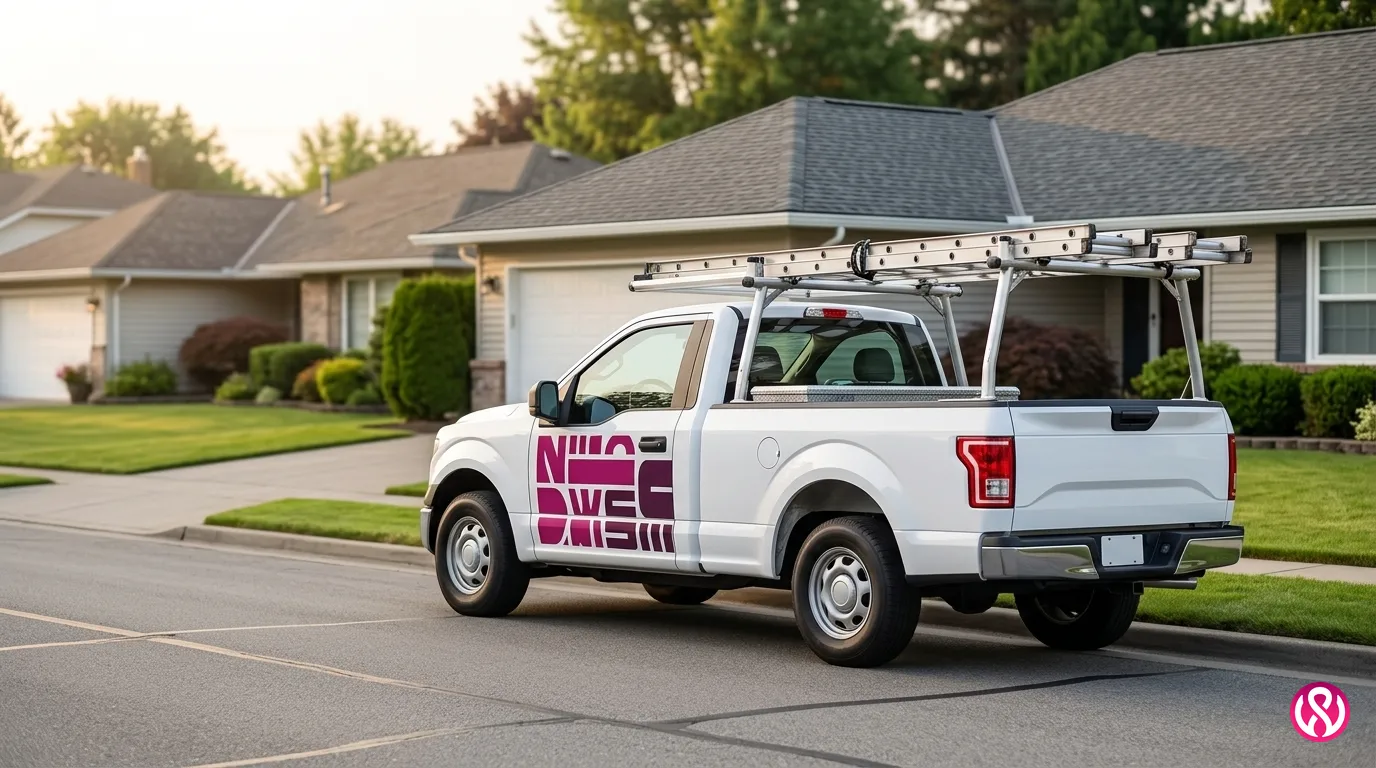
That sentence then goes on your trucks, yard signs, website headline, Google Business Profile description and ads. Consistency is what makes a small roofing brand memorable.
Residential, commercial or both?
Choose your roofing company target market before you pick channels. Residential buyers are homeowners who decide quickly and read reviews. Commercial buyers are property managers and building owners who plan ahead and compare bids. Both can work, but they need different pages, different ads and different follow-up, so most smaller roofers start with one and add the other once it runs smoothly. Specialists such as roof coating businesses usually do best marketing only to commercial and flat-roof owners.
Step 2: Build the website every other channel sends people to
Your website is where almost every other marketing channel ends up. A homeowner who sees your yard sign, your Facebook ad or a neighbor’s recommendation will usually look you up before calling. So a slow or confusing site quietly wastes the money you spend everywhere else.
When we measured 342 US roofing websites on 13 September 2026, the median homepage weighed 3.6 MB and scored 57 out of 100 on Google PageSpeed Insights for mobile. 126 were heavier than 5 MB, and only 9 loaded their main content inside Google’s 2.5 second target. Most roofers are sending their marketing to a page that is slow on a phone.
What a roofing website needs to do its job:
- Your position sentence and service area in the first screen, with a tap-to-call button and a short quote form.
- A page for each service you want more of, and a page for each town you genuinely serve.
- Photos of your own crews and finished roofs, recent reviews, license and warranty details.
- Fast loading on a phone, which mostly means compressed images and fewer add-ons.
- Tracking for calls and form submissions, so you know which marketing works.
This is exactly what we build. Our roofing website design starts at $799 as a fixed price, and the sites that load fastest in our best roofing websites study show what good looks like.
Step 3: Own your local search results
Most roofing searches are local, and Google answers them with a map and three businesses. Getting into those three is the highest-value digital marketing for roofers, because it is free per click and it sits at the top of the page. Google says local results are mainly based on relevance, distance and prominence, and that more reviews and positive ratings can help a business’s local ranking.
- Complete your Google Business Profile: primary category Roofing contractor, every service listed, service area set, hours, photos of real jobs every week.
- Keep your name, address and phone number identical on your website, profile and directory listings.
- Ask for a review after every job, with a direct link, and reply to every review, good or bad.
- Build service and town pages on your website so Google has a clear page to show for each search.
Reviews matter to buyers as much as to Google. In BrightLocal’s 2026 Local Consumer Review Survey, 47% of consumers said they would not use a business with fewer than 20 reviews, and 74% said they only care about reviews written in the last three months. A steady flow beats a one-off push.
Our guides to SEO for roofers and local SEO for roofing companies go step by step through this, and our roofing SEO services are a fixed-price project if you want it done for you.
Sources: Google Business Profile Help, BrightLocal Local Consumer Review Survey 2026.
Step 4: Use paid ads for speed, not as the whole plan
Roofing advertising on Google works, but it is expensive, and it stops the day you stop paying. Think of it as the fast lane on top of the website and profile, not as the road itself. There are three main options.
- Google Local Services Ads: the “Google Verified” listings at the very top. You pay per lead, not per click, and Google says leads it judges invalid are not charged.
- Google Search Ads: the text ads for searches like “roof repair near me”. You pay per click and control the keywords, towns and hours.
- Facebook, Instagram and Nextdoor ads: shown to people in your area who are not searching yet. Best for offers such as free inspections after a storm.
What does a Google Ads budget buy a roofer?
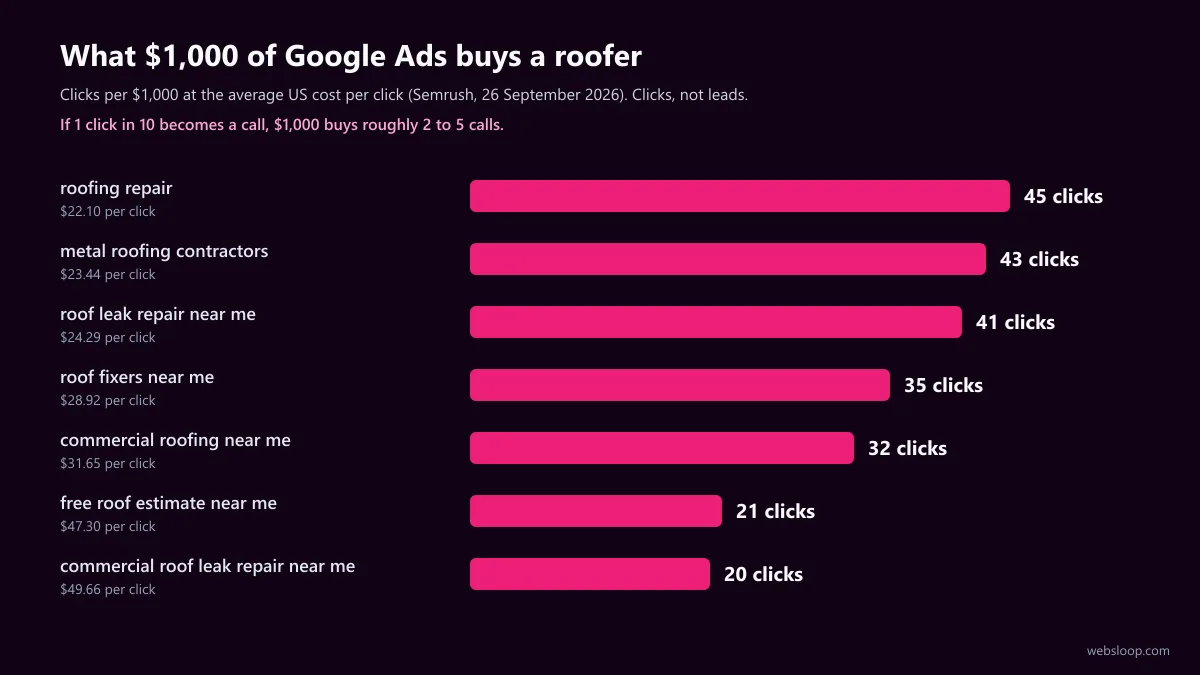
Here is what a budget actually buys on Google Search Ads. These are the average US costs per click from the Semrush data behind our roofing SEO keywords list, turned into clicks per $1,000:
| Search | Average cost per click | Clicks per $1,000 |
|---|---|---|
| roofing repair | $22.10 | 45 |
| metal roofing contractors | $23.44 | 43 |
| roof leak repair near me | $24.29 | 41 |
| roof fixers near me | $28.92 | 35 |
| commercial roofing near me | $31.65 | 32 |
| free roof estimate near me | $47.30 | 21 |
| commercial roof leak repair near me | $49.66 | 20 |
How should roofers run Google Ads?
That is the math behind PPC (pay-per-click) for roofing company ads. Google Ads for roofers work when each campaign is narrow: one service, one area, one matching landing page. Run ads during the hours someone can answer the phone, and add the searches you do not want (jobs, DIY, materials) as negative keywords so you stop paying for them.
Google Ads for roofing companies also need a budget big enough to learn from. Plan for at least 20 to 30 leads in the first month, then judge the campaign on booked inspections rather than clicks. Google Ads for roofing work best on repair, leak and replacement searches, and worst on broad terms like “roofing”, which pull in job seekers and DIY shoppers.
Clicks are not calls. If one click in ten turns into a call or form, which depends heavily on the landing page, $1,000 buys roughly two to five conversations. That is why ads sent to a slow page with no form burn money so fast, and why the website comes first in this plan. For published cost per lead on each ad channel, see our roofing lead generation guide.
Source: Google Local Services Help, How leads work.
Step 5: Keep your name on every street you roof
Offline roofing marketing is cheap, local and still works, because every job happens in public. It is also the oldest advertising for roofing business owners, and still one of the best. Done consistently, it turns one roof into several enquiries from the same street.
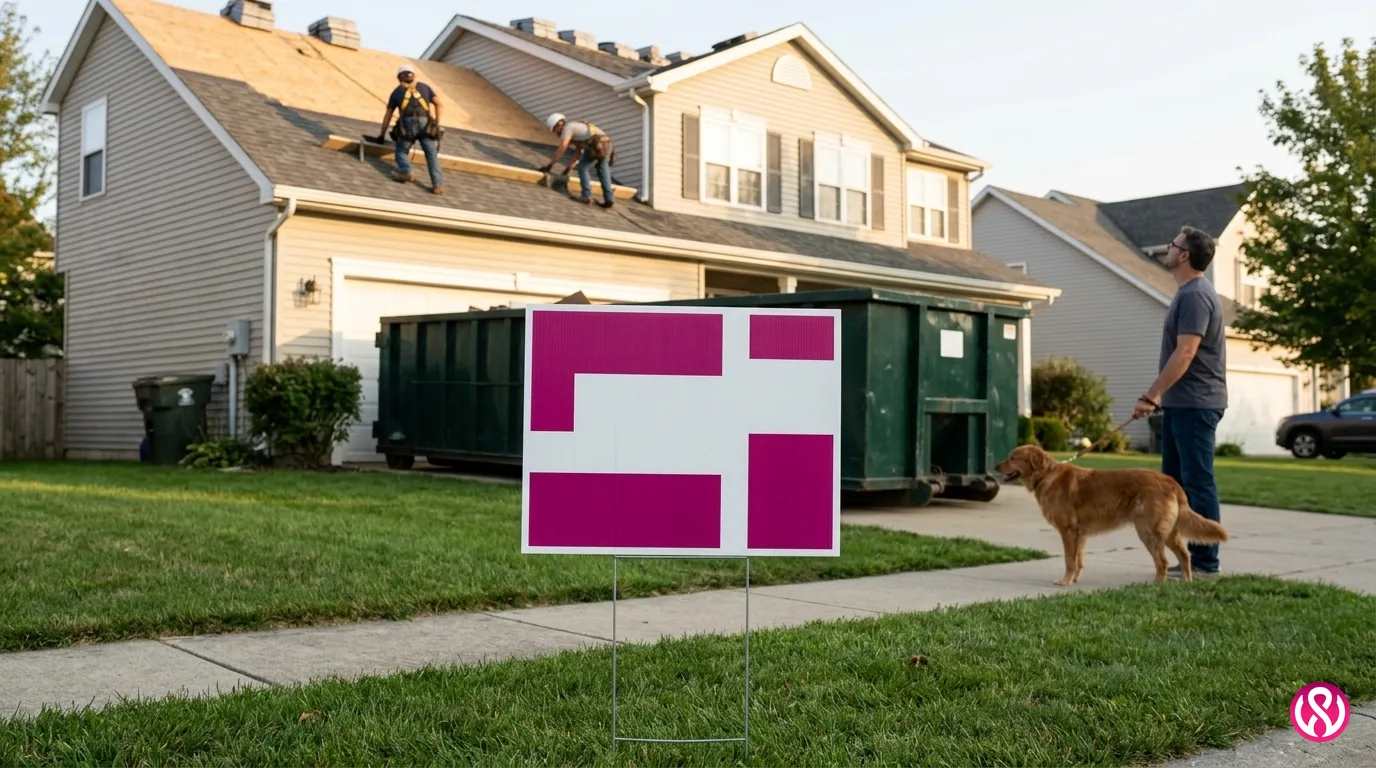
- Yard signs: ask the homeowner before the job, put the sign up a couple of days before you start, and leave it until the final inspection.
- Truck and trailer lettering: your name, phone, website and position sentence, big enough to read in traffic.
- Door hangers: on the neighbors’ doors before you start (a polite notice about noise and parking) and again when you finish.
- Direct mail: postcards to the streets around recent jobs, or to neighborhoods hit by a storm, with a clear offer such as a free inspection.
- Local sponsorships and events: youth sports, school fundraisers and home shows keep your name familiar between roofs.
- Roofing marketing materials: a one-page leave-behind with your warranty and license, a branded inspection report with photos, and business cards for every crew lead.
Printed and mailed advertising still carries weight with buyers. An SBA article citing a MarketingSherpa survey reported that 76% of consumers said they usually trust direct mail when making a purchase decision, behind print and TV. The survey is from 2017, so treat it as a direction rather than a current number.
Source: U.S. Small Business Administration, Why Traditional Advertising Still Matters.
What are good roofing promotions and roofing advertising ideas?
The best roofing promotions give a homeowner a reason to call now without pretending there is a deadline that does not exist. Honest offers work better than fake urgency, and they keep you on the right side of advertising rules.
- Free roof inspection after a named storm in your area, with a photo report.
- Seasonal roof and gutter check in spring or autumn, priced low to start a relationship.
- Financing on replacements, if you offer it, stated plainly with the terms.
- Referral thank-you for past customers when a neighbor signs.
- Maintenance plans for commercial buildings, with a set number of inspections a year.
Roofing ads that work tend to share three things: one clear offer, the town or neighborhood named, and proof such as a review count or years in business. A few roofing ads examples in that shape:
- “Hail in Maple Grove last week? Free roof inspection with photos. Local crew, 4.8 stars from 60 reviews.”
- “Roof replacement in the north suburbs. Written 10-year workmanship warranty. Call for a same-week quote.”
- “Leaking flat roof? Commercial roof repair for property managers, inspection within 48 hours.”
Swap in your own towns, numbers and promises, and only claim what you can prove. The best roofing ads, the best advertising for roofing and the best marketing for roofing companies in general are the ones you can track to signed jobs.
Step 6: Turn every finished job into more work
Your past customers are the cheapest marketing you have, and most roofing companies barely use them. They already know your work, they have neighbors, and their roofs will need attention again.
- Ask for a review the day the job is finished, with a direct link.
- Ask for a referral a few weeks later, with a simple thank-you when one signs.
- Send a short email or postcard each spring and autumn: storm season reminders, gutter checks, free inspections.
- Keep a list of roof ages. Customers whose roofs are 15 to 20 years old are your future replacement jobs.
- Photograph every job for your website, profile and social media, with the homeowner’s permission.
Step 7: Use social media and video to show the work
Social media marketing for roofers, and for roofing companies of any size, works best as proof, not as ads. The best social media platforms for roofing contractors are the ones your buyers already use, which for most means Facebook, Nextdoor and Instagram. Homeowners want to see real crews, real roofs and real neighbors, and roofing is one of the few trades where a 30-second video of the work is genuinely interesting to watch.
- Facebook: local community groups are where many homeowners ask for recommendations. Facebook marketing for roofing works best as finished-job posts, helpful answers in those groups, and small ads with a clear offer.
- Nextdoor: built around real neighborhoods. Recommendations from neighbors carry a lot of weight here.
- Instagram and YouTube: before-and-after photos, drone shots of finished roofs, short videos explaining a repair.
- LinkedIn: for commercial roofing, where property and facility managers actually are.
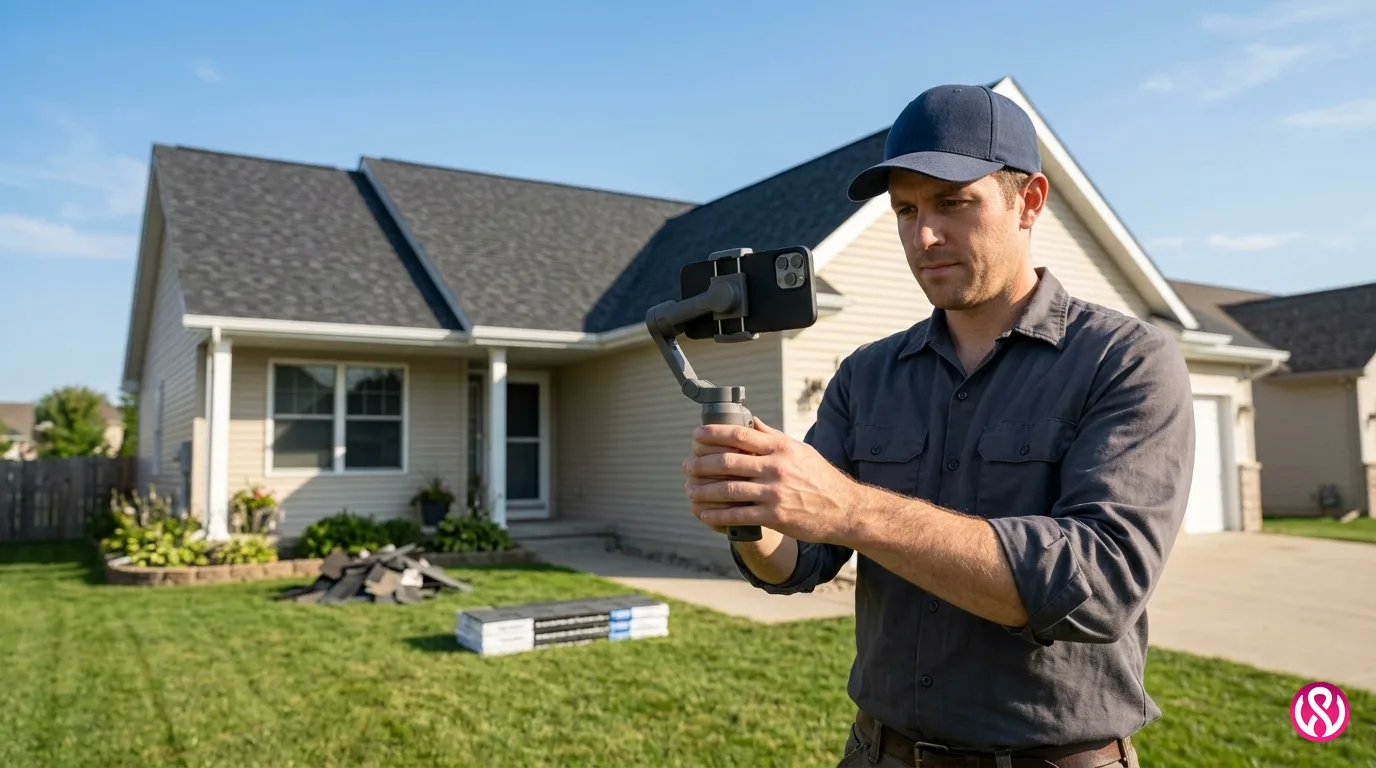
Post what you would show a homeowner at their kitchen table: the damage you found, how you fixed it, and the finished roof. A phone and a steady hand are enough. What matters is posting every week, not polish.
Step 8: Answer the questions homeowners ask, on Google and in AI search
Homeowners research before they call: how much a new roof costs, whether a leak means replacement, how insurance claims work, which shingles last longest. Pages on your website that answer those questions plainly bring in people early, and they give Google and AI assistants something to quote.
Keep each answer short and direct at the top, then add detail, photos and your own prices or ranges where you can. A cost page that says “most roof replacements we do in this area run between X and Y, and here is what changes the price” is far more useful than one that says “it depends”. AI tools such as ChatGPT, Gemini and Google’s AI Overviews pull from pages that answer questions clearly, so the same pages that help homeowners also help you get mentioned there.
What is the highest ROI marketing channel for roofing contractors?
Usually the ones you own or earn: referrals, repeat customers, your Google Business Profile and reviews, and a website that converts. They cost the least per signed job because you are not paying for each click or lead. Paid channels can still have a strong return, but you only know by tracking cost per signed job in your own business.
Published roofing advertising effectiveness statistics are thin, and many figures quoted online have no source. The ones on this page are sourced: BrightLocal on reviews, Google on how local ranking and Local Services Ads work, Gartner on budgets, and the SBA on direct mail. For anything else, your own numbers beat an industry average.
How much should a roofing company spend on marketing?
There is no verified industry benchmark for roofers. Figures of 5 to 10% or 5 to 12% of revenue appear on many roofing blogs, but we could not find a published study behind them. The closest solid number is Gartner’s 2026 CMO Spend Survey: marketing budgets averaged 7.8% of company revenue, up from 7.7% in 2025. That survey covered 401 marketing leaders, most at companies with over $1 billion in revenue, so it is a reference point, not a rule for a roofing company.

A more useful way to set a roofing marketing budget is to work backwards from the jobs you want:
- Decide how many extra jobs you want per month and what an average job is worth to you.
- Estimate your close rate from inspections, and your booking rate from leads.
- That gives the number of leads you need. Multiply by a realistic cost per lead for each channel.
- Add fixed costs: the website, yard signs, truck lettering, a CRM.
- Review every month and move money toward the channels with the lowest cost per signed job.
For example, if you want four more replacements a month, close one in three inspections and book half of your leads, you need about 24 leads a month. At $100 a lead that is roughly $2,400 a month in paid channels, plus the fixed costs. Change any of those numbers and the budget changes with them, which is exactly why a flat percentage is a poor guide. For what SEO itself costs a roofer, month by month or once, see our roofing SEO cost breakdown.
Source: Gartner 2026 CMO Spend Survey press release.
What roofing company marketing plan fits your stage?
The right roofing marketing strategy depends on your size and how quickly you need work. This is the order we would suggest:
| Stage | Focus first | Then add | Skip for now |
|---|---|---|---|
| New roofer, one crew | Position sentence, Google Business Profile, reviews, yard signs, neighbors | A simple fast website with a form and tap-to-call | Big ad budgets, brand campaigns, paid social |
| Established, 2 to 5 crews | Website with service and town pages, Local Services Ads, referral program | Google Ads on your best services, direct mail around jobs, weekly social posts | Spending on channels you cannot track |
| Growing, with sales staff | Everything above, tracked by source | Commercial marketing, video, sponsorships, a storm response plan | Anything without a cost per signed job |
When should roofers market?
All year, with the weight shifted by season. Roofing demand moves with the weather, so a marketing calendar keeps you from going quiet in slow months and being unprepared in busy ones.
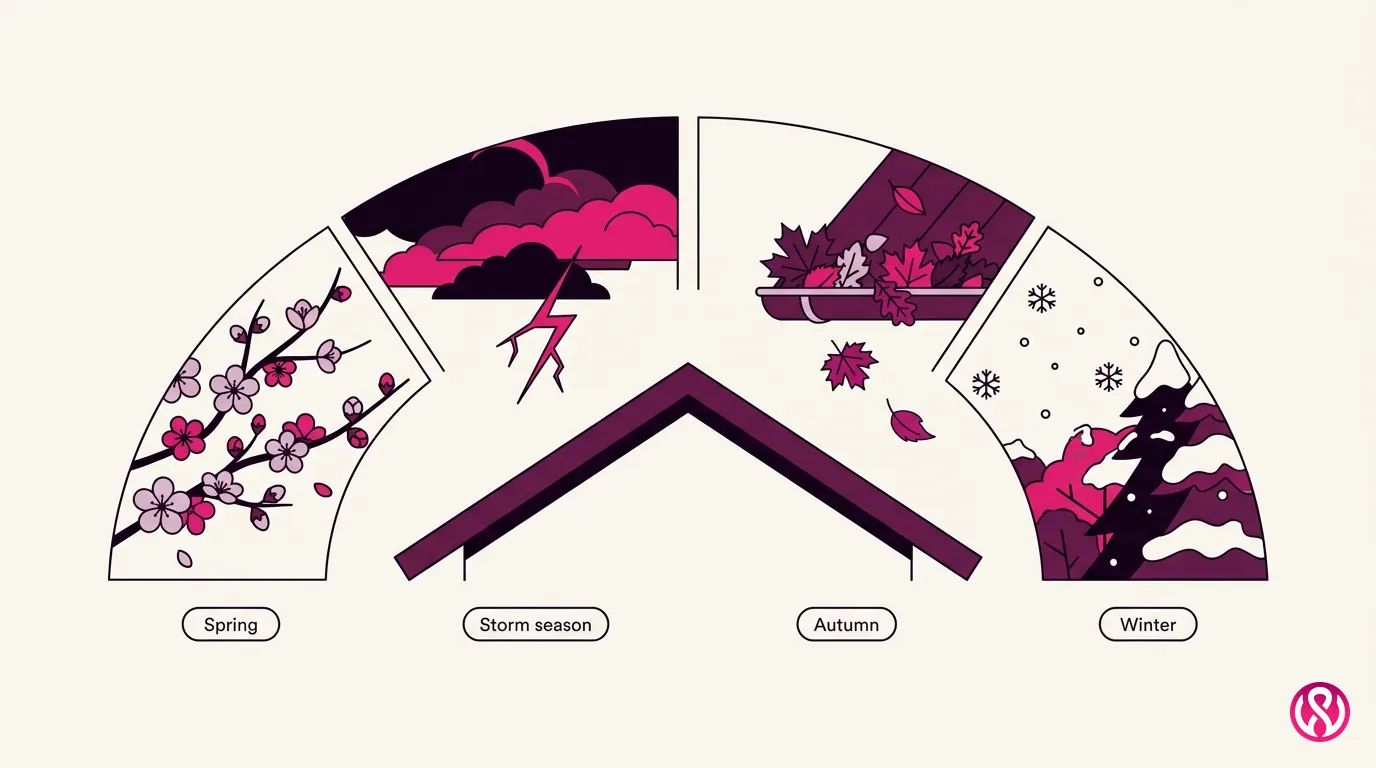
- Late winter: build and fix website pages, gather reviews, plan storm season, contact past customers about spring inspections.
- Spring and early summer: raise ad budgets, push inspection offers, keep yard signs and door hangers going on every job.
- Storm weeks: update your Google Business Profile, raise Local Services Ads budgets for affected areas, and make sure every call gets answered.
- Autumn: gutter and pre-winter inspection offers, referral requests from the year’s customers.
- Winter: emergency leak repair ads, commercial maintenance agreements, and the content and pages that will rank by spring.
How do you market commercial roofing?
Commercial roofing marketing targets a smaller, more deliberate buyer: property managers, facility managers, building owners, general contractors and HOAs. They plan months ahead, ask for several bids and check safety records and insurance.
- A separate commercial section on your website, with a page per roofing system you install and case studies by building type.
- Search ads and SEO for commercial terms, which cost more per click but lead to larger jobs.
- LinkedIn and direct outreach to property management companies.
- Maintenance agreements that turn one repair into years of inspections and a future replacement.
How do you measure roofing marketing?
Track four numbers by source every month: leads, booked inspections, signed jobs and revenue. From those, work out cost per signed job for each channel. That one figure settles most marketing arguments.
- Ask every caller “How did you hear about us?” and add the same question to your website form.
- Use separate tracking phone numbers for ads, direct mail and yard signs where you can.
- Log every lead in a CRM with its source, so nothing is lost and reports are easy.
- Use Google Analytics and Search Console, both free, to see which pages and searches bring calls and forms.
Give each channel enough time and money to judge fairly. A month of Google Ads on a small budget tells you little, and SEO takes months before it shows up in the numbers.
Should you hire a roofing marketing agency or do it yourself?
Do the first steps yourself: the position sentence, the Google Business Profile, review requests, yard signs and referrals. They cost little and nobody knows your work better than you. Hire help for the parts that need specialist skill or steady time: a fast website, SEO, and paid ad management.
Before hiring anyone, ask who owns the website and ad accounts if you leave, what is included in the monthly fee, whether there is a minimum contract, and how results will be reported in leads and jobs rather than clicks and impressions. An agency that cannot answer those clearly is not the right one. We compared ten of them on published price and terms in our roofing SEO agencies roundup.
Who we are, and who we are not for
We build websites and do fixed-price SEO for roofing companies. We do not run paid ads, print mailers or manage social media accounts. If you need someone to run your whole marketing every month, a full-service roofing marketing agency will suit you better. If you want the foundation that makes every other channel cheaper, a fast site with the pages and tracking described here, that is what we do.
Our verdict on roofing marketing
If you are working out how to grow your roofing business, start with why most marketing stalls. Most roofing marketing fails for boring reasons: no clear reason to choose the company, a slow site with no form, a thin Google profile and no tracking. Fix those first. Then add ads for speed, keep your name on every street you work on, stay in touch with past customers, and judge every channel on cost per signed job.
If you want a second opinion on where your roofing marketing is leaking, we will look at your site and profile and tell you plainly what is worth fixing. Our website and SEO prices are published on our pricing page, and our contractor SEO page covers the other trades.