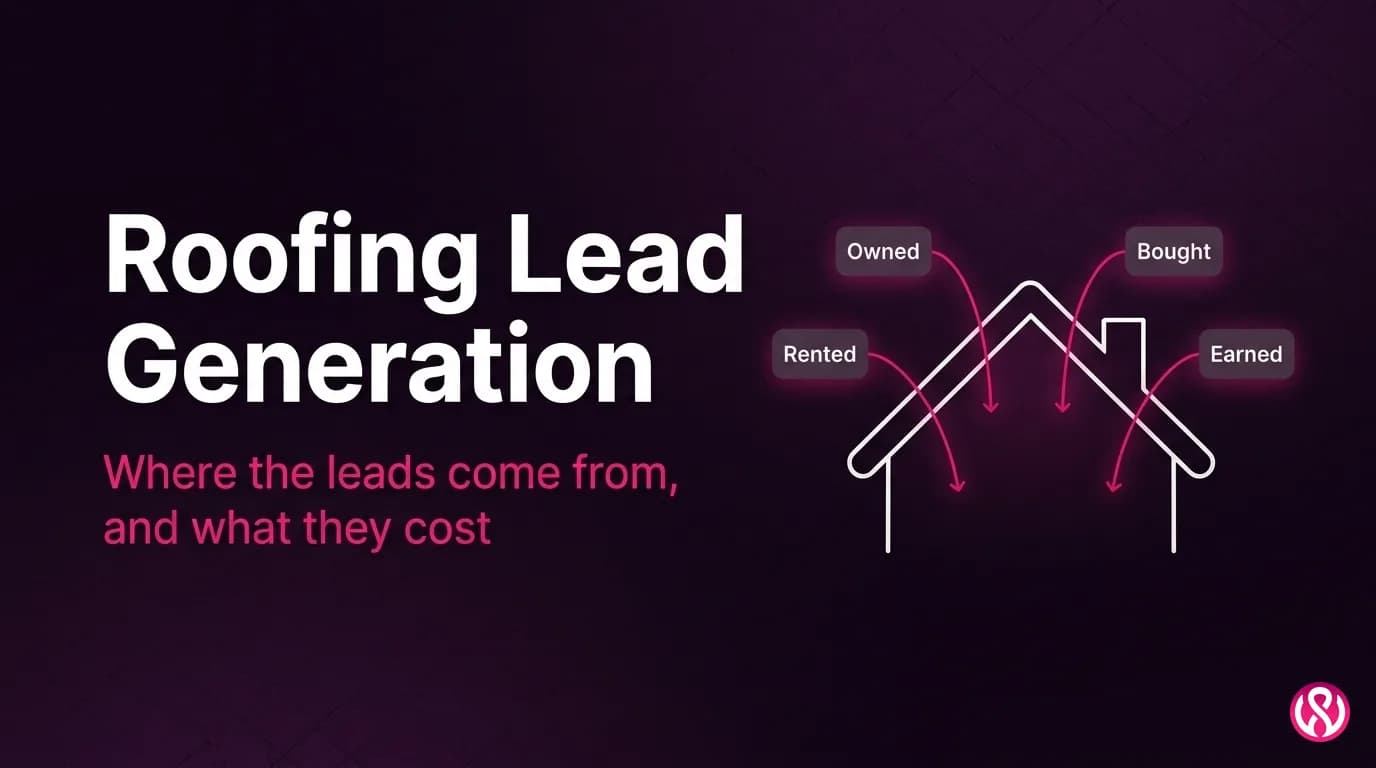
Roofing lead generation is how a roofing company gets homeowners and property managers to call, text or request a quote. The leads come from four places: channels you own (your website, Google Business Profile and SEO), channels you rent (Local Services Ads, Google Ads, Facebook), leads you buy from a seller, and leads you earn from referrals and neighbors. Owned channels cost the least per lead over time, but only if the website can catch the leads. When we measured 342 US roofing websites, 144 had no quote form on the homepage.
This guide covers every channel that produces roofing leads, what each one costs per lead from published figures, and which to start with at each size of business. People search for this in a lot of ways: how to get roofing leads, leads for roofing contractors, the best way to get roofing leads, whether to buy roofing leads, exclusive roofing leads, commercial roofing leads. They all come back to the same question: where will the next roof come from, and what will it cost?
What is roofing lead generation?
A roofing lead is a person who has asked you about a roofing job and left a way to reach them: a phone call, a form, a text, a message through Google. Roofing lead generation is the system that produces those contacts on purpose, week after week, instead of waiting for the phone to ring after the next storm.
Three words get mixed up constantly, and the difference matters when someone is selling you something. A lead is a contact. An appointment is a lead who agreed to an inspection. A job is a signed contract. Lead sellers and ad platforms count leads. You get paid for jobs. Every cost in this guide is per lead, so always ask what share of those leads turn into jobs before you compare prices.
Two more terms show up in every lead seller’s pitch. An exclusive lead goes to you alone. A shared lead is sold to several roofers at once, and the first one to call tends to win it. Residential and commercial roofing leads behave differently too: a homeowner with a leak wants someone this week, while a property manager planning a flat roof replacement may take months and ask for three bids.
What makes a good roofing lead?
A good roofing lead is a homeowner or property manager in your service area, who owns the building, has a job you actually do, and wants it done soon. Everything else is noise you still pay for. Four quick checks sort most leads within the first call:
- Location: inside the towns your crews already drive to.
- Ownership: the owner or the person who decides, not a tenant asking for a price to pass on.
- Job type: replacement, repair, storm damage or commercial work you want more of.
- Timing: a leak, an insurance claim or a sale date gives a real deadline.
Good roofing lead generation is judged by how many leads pass those four checks, not by how many contacts arrive. A channel that sends twenty leads and four good ones is worse than one that sends eight leads and five good ones, even if its cost per lead looks lower.
What are the four ways roofing companies get leads?
Every roofing lead source fits into one of four groups. The groups differ in how fast they work, what they cost, and whether you keep anything when you stop paying.
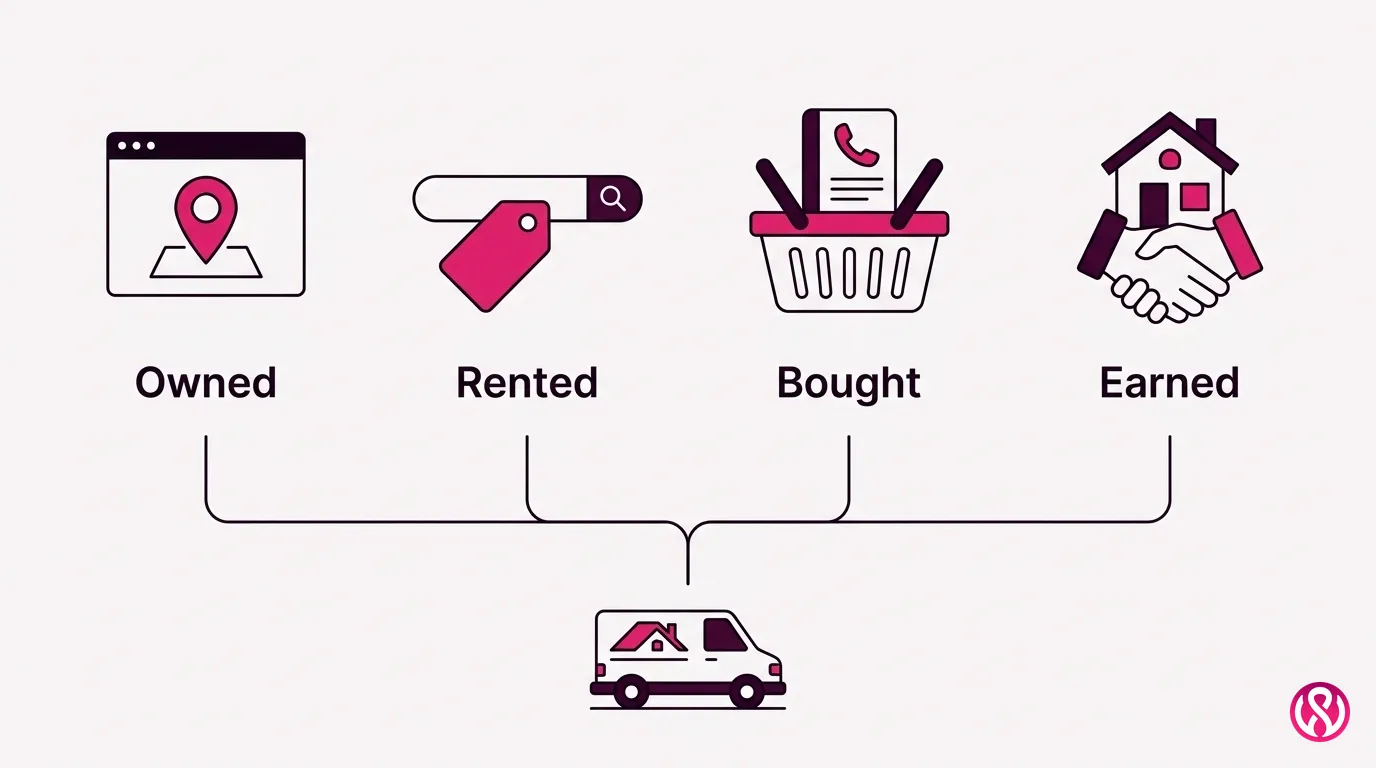
| Source | Examples | Speed | Cost pattern | What you keep if you stop |
|---|---|---|---|---|
| Owned | Website, Google Business Profile, SEO, reviews | Months to build | Up front, then low | Everything |
| Rented | Local Services Ads, Google Ads, Facebook and Nextdoor ads | Days | Every lead or click | Nothing |
| Bought | Angi, Thumbtack, lead sellers | Days | Every lead | Nothing |
| Earned | Referrals, neighbors after a job, yard signs, partners | Weeks | Low, mostly time | Your reputation |
Most roofing companies that grow steadily run all four. Rented and bought leads fill the calendar now. Owned and earned leads get cheaper every month and are still there when you cut the ad budget in a slow winter. The mistake we see most is running only rented and bought channels, because the company ends up paying the same price for the same lead forever.
Here is the part most lead generation advice skips: all four groups send people to the same place. A homeowner who sees your Local Services Ad, your yard sign or a friend’s recommendation will almost always look you up before they call. So the website and profile they land on decide how many of those people turn into leads at all.
Why do roofing websites lose the leads they already get?
Because many of them make it hard to get in touch. On 13 September 2026 we ran 342 US roofing contractor websites through Google PageSpeed Insights on the mobile setting and read each homepage’s code. The results show how many leads are lost before any marketing spend comes into it.
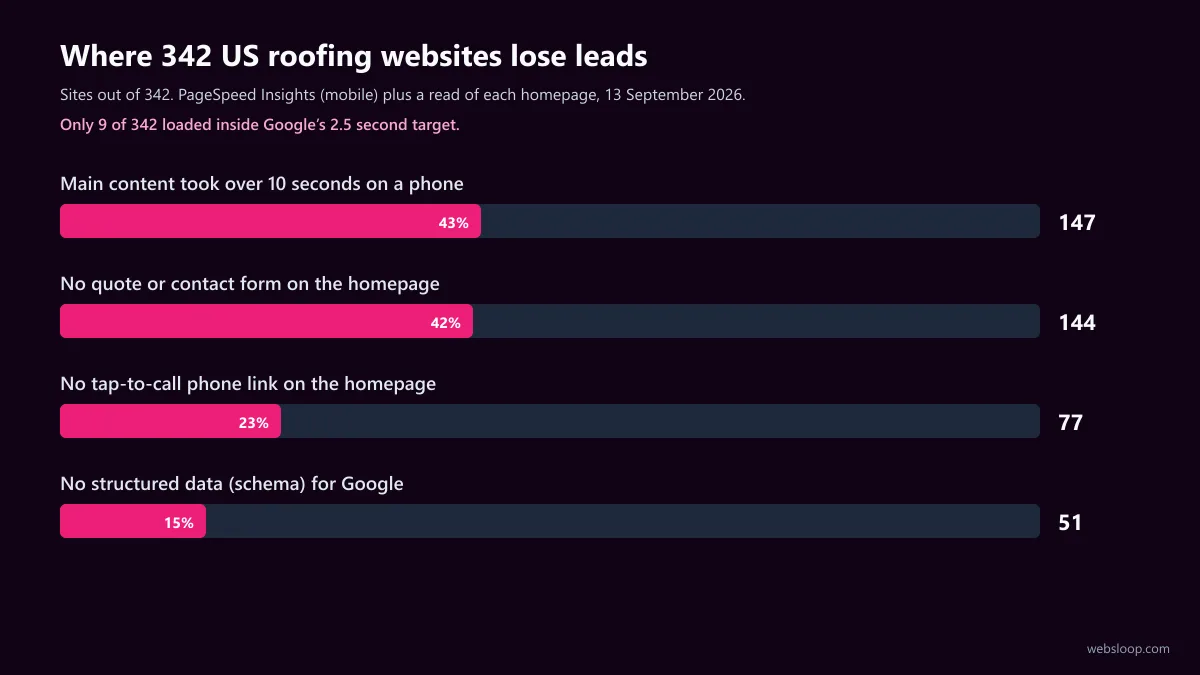
- 144 of 342 (42%) had no quote or contact form on the homepage. A homeowner reading at 10pm after spotting a stain on the ceiling has nowhere to leave their details.
- 77 (23%) had no tap-to-call link. On a phone, the number has to be copied or typed by hand, which many people will not bother to do.
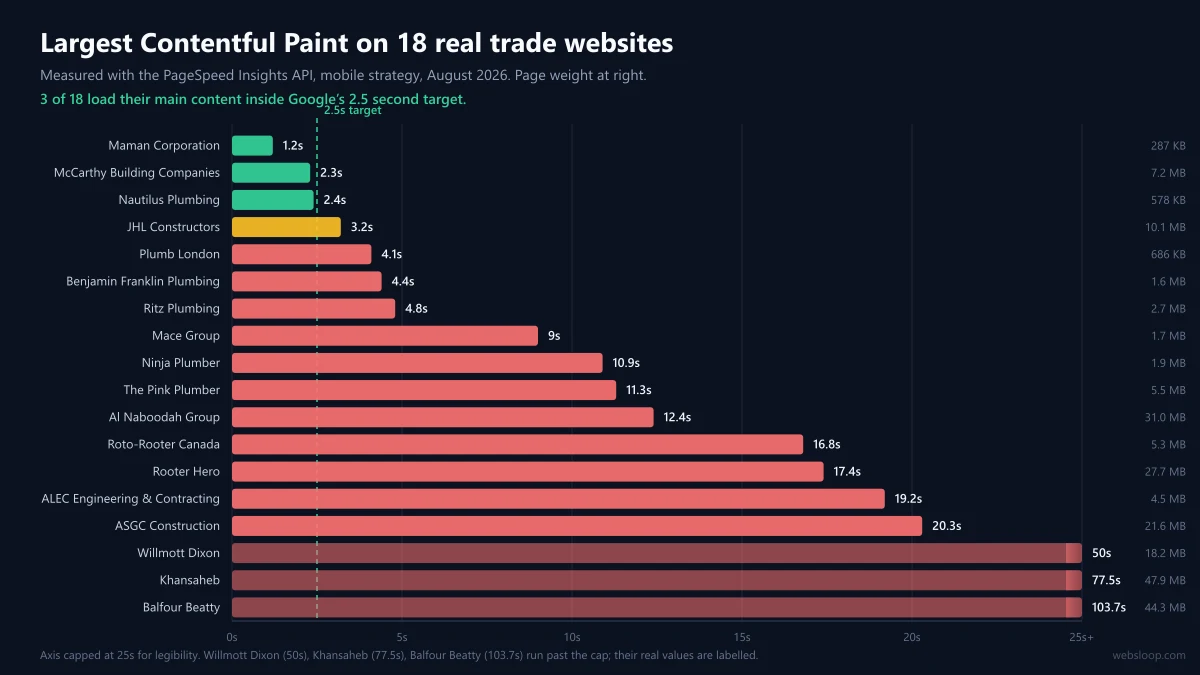
- 147 (43%) took more than 10 seconds to show their main content on a phone. Only 9 of 342 met Google’s 2.5 second target. The median was 9.2 seconds.
- 51 had no structured data at all, the code that tells Google your business name, phone number and service area in a form it can read directly.
The sample came from a purchased lead list of roofing contractors with up to 100 employees, so it is not a random draw of the whole industry. It is still a clear picture of what a homeowner meets when they click through from an ad or a map listing. Our best roofing websites study looks at the sites that get this right.
The practical point is simple. If you pay $150 for a Google Ads lead and send that person to a page with no form and no tap-to-call button, you pay for clicks from people who could not easily contact you. Fixing the website first makes every other channel on this list cheaper per lead.
How do you turn a roofing website into a lead generator?
A roofing website produces leads when a homeowner on a phone can see who you are, trust you and contact you within a few seconds. That comes down to a short list of things, and most of them are cheap to fix.
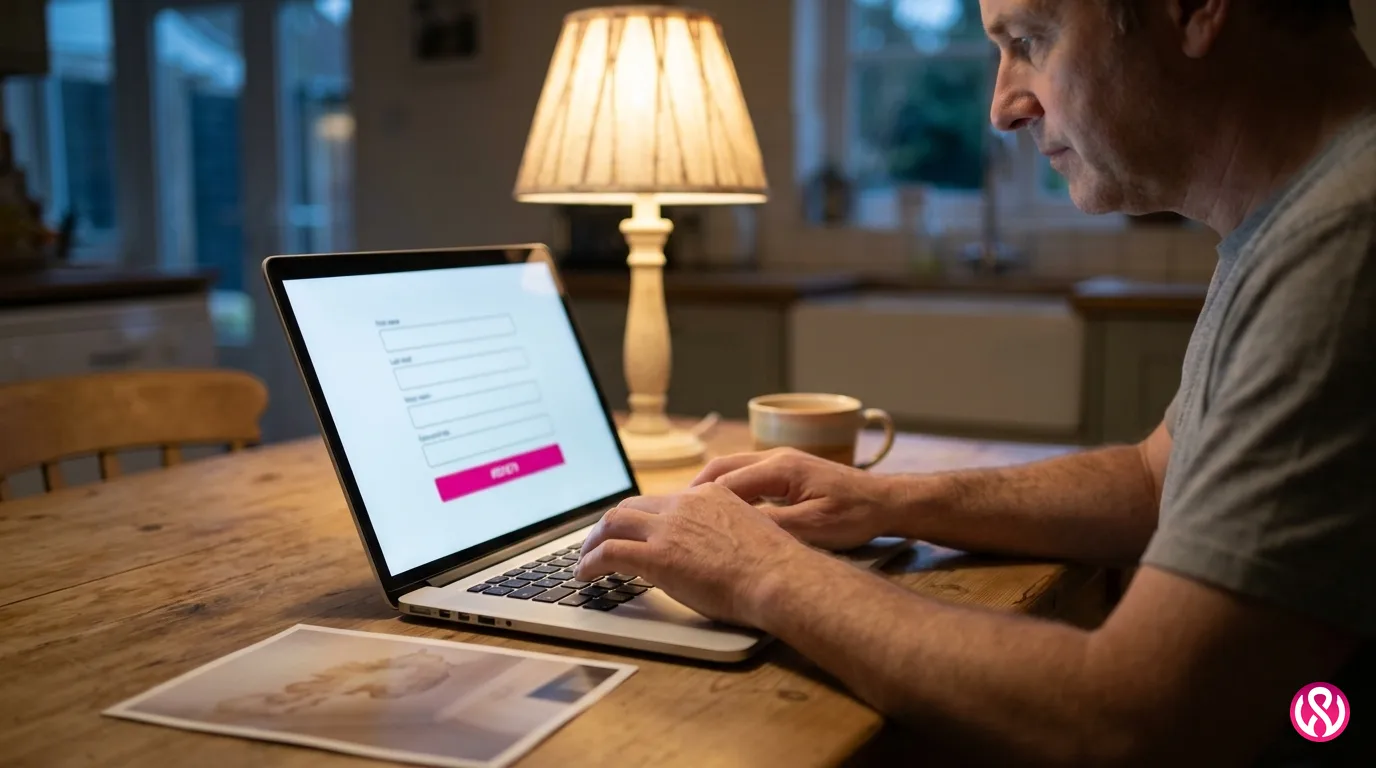
- A tap-to-call button on every page, fixed to the screen on mobile so it is always within reach of a thumb.
- A short quote form with four or five fields: name, phone, address or ZIP, what is wrong with the roof, and an optional photo upload.
- One page per service you want more of: roof replacement, roof repair, storm and hail damage, inspections, gutters, commercial roofing, and each roof type you install.
- One page per town you genuinely work in, with jobs you have done there, not the same text with the town name swapped.
- Real proof near the call to action: recent reviews, photos of your own crews and finished roofs, your license number, manufacturer certifications and warranty terms.
- A mobile load time under about 2.5 seconds, which usually means compressed images, fewer plugins and no autoplay video on the homepage.
- Financing and insurance information if you offer it, because “can I afford this” and “will insurance pay” are the two questions behind most roof replacement leads.
- A way to tell where each lead came from: a “How did you hear about us?” question on the form and on every call.
Do roofers need an instant estimator?
Some roofing software companies also sell instant estimators, a widget that measures the roof from satellite imagery and shows a price range on your site. They can work well for replacement leads because the homeowner gets a number without waiting. They do not replace the basics above: a fast page, a visible phone number and a form that works on a phone.
This is the work we do on our roofing website design projects. A new roofing website with us starts at $799, a fixed price quoted before any work begins, and you own the site outright.
How do Google Local Services Ads work for roofers?
Local Services Ads are the listings with the “Google Verified” badge that sit at the very top of many “roofer near me” searches. You pay per lead, not per click. Google’s own help page says you are charged for each valid lead, that leads it judges invalid are not charged, and that lead prices vary by location, job type and lead type.
To appear, a roofing company has to pass Google’s screening and verification process, which is what earns the badge. You set an average weekly budget and the most you are willing to pay per lead, Google sends leads until the budget is spent, and you can report leads that were no use to you. Google’s help page says it may credit some of those, and reassesses charged leads over time.
The strengths are speed and intent. A homeowner who taps your Local Services Ad is usually ready to talk now. The weaknesses are that you rent the position and that leads can be broad: a search for “roofer” brings small repairs as well as replacements. Answer every call, because a homeowner who reaches voicemail usually just taps the next roofer in the list.
Source: Google Local Services Help, How leads work.
How much do roofing leads cost?
It depends mainly on the channel and your market, and a few companies publish real figures. The table below uses only published numbers with their source. We checked each one on 28 September 2026.
| Channel | Cost per lead | What the figure is | Source |
|---|---|---|---|
| Google Local Services Ads | $79 to $177 | per lead, nationwide, 10th to 90th percentile of what 99 Calls clients paid over 12 months | 99 Calls roofing leads page |
| Google Search Ads | $135 to $481 | per lead, nationwide, 10th to 90th percentile of what 99 Calls clients paid over 12 months | 99 Calls roofing leads page |
| Local Services Ads, all home services | $53 average | February 2026, 888 contractors, 126,650 leads, no roofing row | SearchLight benchmark |
| Non-branded Google Ads, all home services | $149 average | January 2026, same benchmark, searches that do not name your company | SearchLight benchmark |
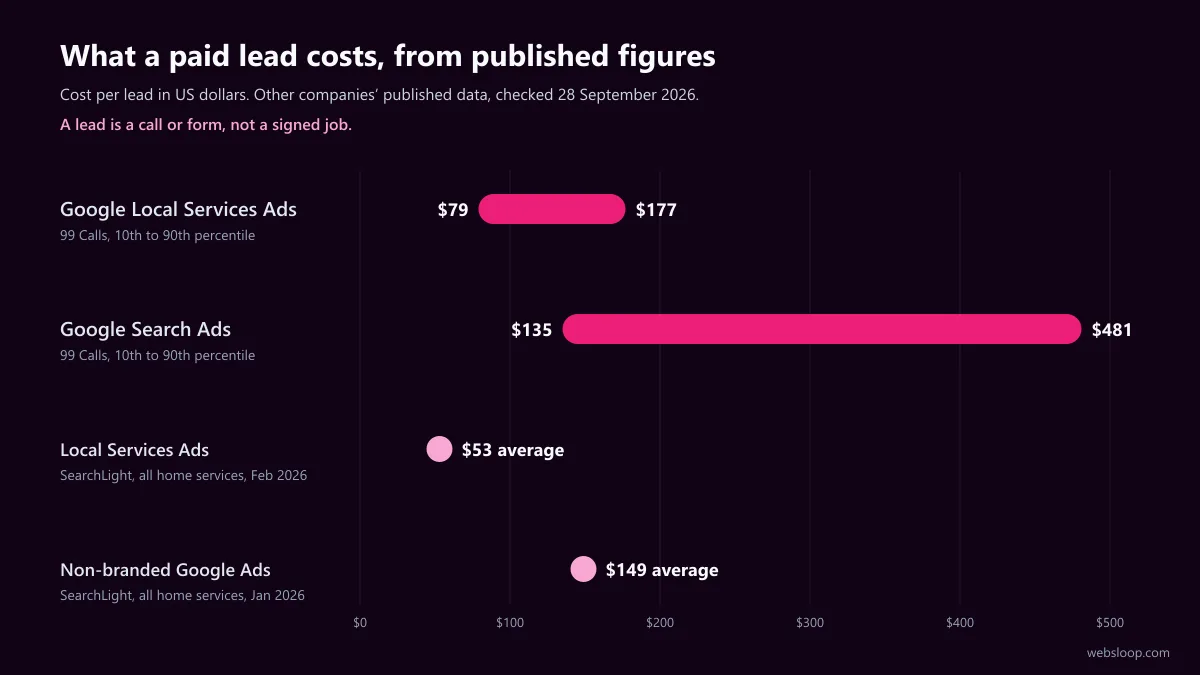
Two things stand out. Local Services Ads leads cost less than Google Search Ads leads in both datasets. And the range is wide: the same channel can cost two or three times more in a busy metro than in a small town, and more again in storm season when every roofer bids at once.
The number that matters is cost per signed job. A $60 lead that closes one time in ten costs $600 per job. A $150 lead that closes one time in three costs $450. Track both, or you will cut the channel that is actually working.
Are Google Ads worth it for roofing leads?
For most roofers, yes, as long as the budget is big enough to learn from and the landing page can convert. Roofing searches are some of the most expensive clicks in local services. In the Semrush data behind our roofing SEO keywords list, advertisers paid about $24 a click for “roof leak repair near me”, about $32 for “commercial roofing near me” and about $47 for “free roof estimate near me”.
At those prices a small test budget runs out before it tells you anything. As a rough rule, plan for enough spend to buy at least 20 to 30 leads in the first month, then judge the campaign on booked inspections, not clicks. Send ads to a page about the exact service in the ad, with the phone number and form visible straight away, not to your homepage.
Skip Google Ads for now if you cannot answer the phone during the day, if your website has no form or tap-to-call button, or if you have no reviews yet. Each of those raises the cost of every lead, and Local Services Ads or your Google Business Profile will usually do better first.
Should you buy roofing leads?
Buying roofing leads makes sense when you need volume quickly, have a sales team that can call within minutes, and track close rates by source. It rarely makes sense as the only source, because you pay the same price for every lead forever and build nothing that lasts. Lead sellers range from marketplaces like Angi and Thumbtack to companies that sell exclusive leads by ZIP code.

Roofing lead generation companies vary a lot in what they actually deliver. Before you sign with one, or with any lead seller, ask these questions and get the answers in writing:
- Exclusive or shared? If shared, with how many roofers, and how is the lead sent to each?
- Where do the leads come from? Their own ads, their own websites, or resold from someone else?
- What counts as a lead? A phone call over a certain length, a form, or any click?
- What is the credit policy? Wrong number, outside your area, a renter, or a job you do not do.
- Is there a contract or minimum spend, and how much notice is needed to stop?
- How was the homeowner’s consent to be contacted recorded? Calling or texting people who did not agree can create legal risk for you, not only for the seller.
Exclusive roofing leads cost more per lead, but they usually close at a higher rate because you are not racing three competitors to the phone. Shared leads can still work if you can call within a minute or two, every time, including evenings and weekends. If you cannot, buy fewer, exclusive leads.
Do Facebook and Nextdoor ads work for roofing leads?
They can, but they work differently from Google. Someone searching Google for “roof repair” has a problem right now. Someone scrolling Facebook or Nextdoor does not, so social ads work best as an offer to people who have been meaning to deal with their roof: a free inspection after a storm, a seasonal gutter and roof check, or financing on a replacement.
- Target by place, not by interest. Draw the ad area around the neighborhoods you work in, and around the streets where you have just finished a job.
- Use your own photos. A real crew on a real roof in a town people recognize beats any stock image.
- Use a lead form or a short landing page, and call every lead the same day. Social leads cool off faster than search leads, because the person was not looking for you.
- Expect lower intent. Social leads are often cheaper per lead and slower to close, so compare them on cost per signed job like everything else.
Nextdoor is worth a separate mention because it is built around real neighborhoods, and its recommendations section is where homeowners ask each other which roofer to call. An honest, helpful presence there often brings more work than paid posts.
Which referral partners send roofing leads?
The people who meet homeowners before a roofer does. A few good partners can send a steady trickle of warm leads all year, and they cost you little more than reliability and a quick response.
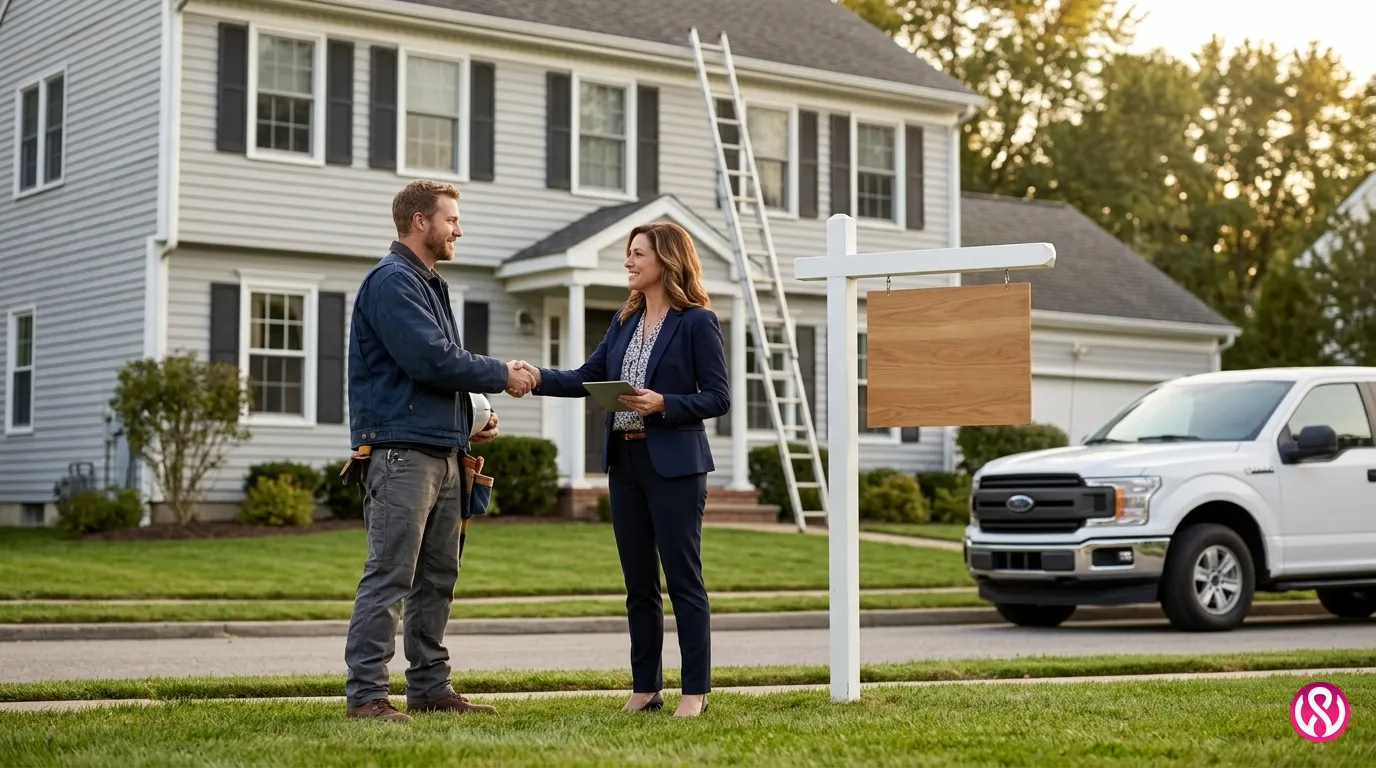
| Partner | Why they meet your customers first | What to offer them |
|---|---|---|
| Real estate agents | Buyers and sellers need a roof inspection or repair to close | Inspections and repair quotes within a day or two |
| Home inspectors | They flag roof problems in every inspection report | A clear contact and fast written quotes |
| Property managers and HOAs | They look after many roofs at once | Maintenance plans and one contact for every building |
| Other trades | Gutter, siding, window, solar and HVAC crews see roofs daily | Referrals back the other way |
| Insurance agents | Policyholders call them first after a storm | Thorough, well documented inspection reports |
Keep a simple list of who referred whom, thank every partner when a referral signs, and follow up every referral the same day. A partner who hears their client waited three days for a call will stop sending anyone.
How do you get roofing leads in storm season?
Storms create a surge of real demand in a few days, and the roofing companies that do well are the ones who prepared before the season started. Storm season roofing lead generation is mostly about easy to find, easy to reach and believable on the day the hail falls.
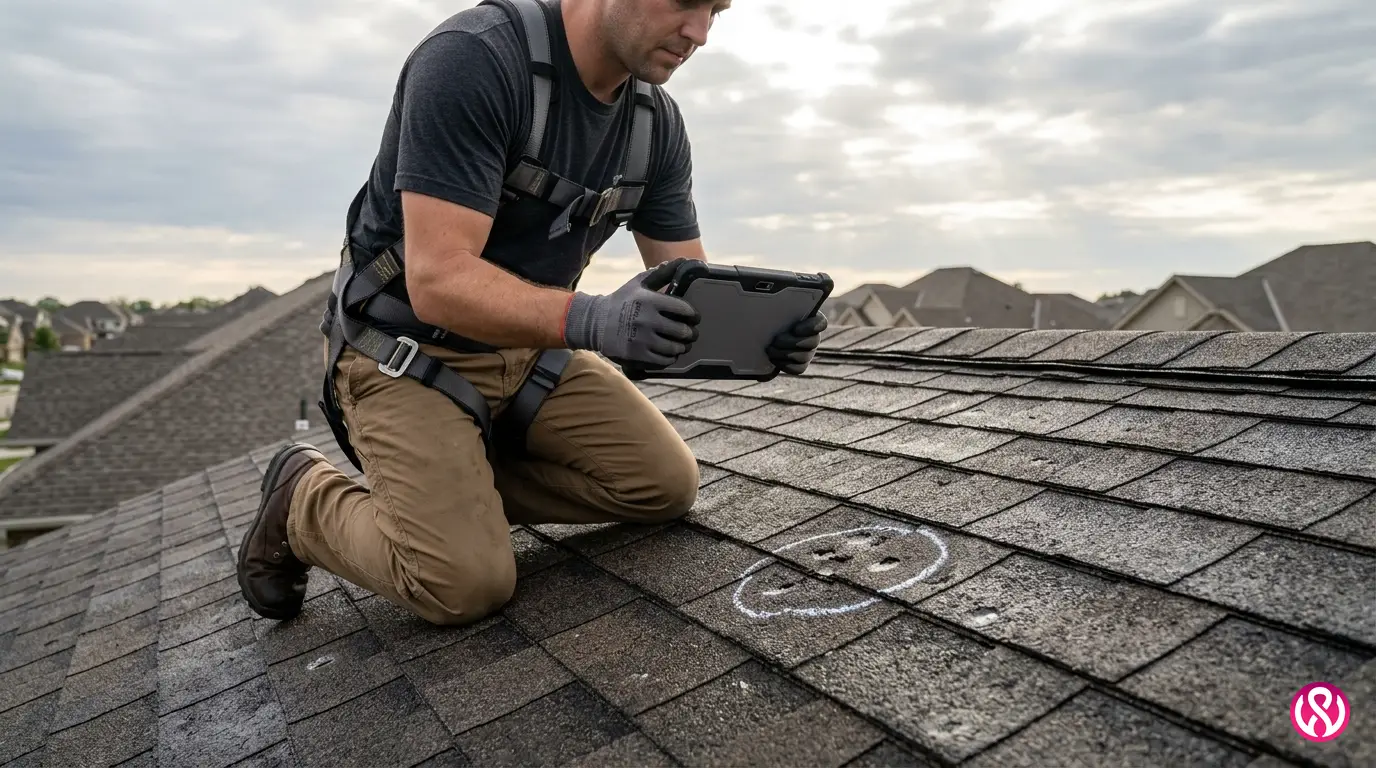
- Publish a storm and hail damage page before the season, so it has time to be found. Explain what to look for, how inspections work and what to expect from insurance.
- Keep your Google Business Profile current: hours, photos of recent storm repairs and a post when a storm hits your area.
- Raise Local Services Ads budgets for the affected ZIP codes, and make sure someone can answer every call that week.
- Work the streets you already know. Past customers and their neighbors in the path of the storm are the warmest storm leads you have.
- Be honest about your capacity. Booking more inspections than your crews can handle damages reviews for years.
Homeowners are wary after storms because out-of-town crews arrive, knock on doors and leave. A local address, a license number, local reviews and photos of your own trucks on the website are what separate you from them, and they are exactly what a nervous homeowner checks before calling.
How does SEO generate roofing leads?
SEO brings leads from two places on Google: the map pack, the three local results under a map, and the ordinary results below it. Google says local results are mainly based on relevance, distance and prominence, and that more reviews and positive ratings can help a business’s local ranking. The map pack is where most “roofer near me” leads come from, so it usually comes first.
The organic results come from your website. A page for roof replacement, one for storm damage and one for each town you serve gives Google a clear page to show for each search. A roof leak repair page that ranks brings calls at no cost per click, for as long as it ranks. The trade-off is time: expect months, not weeks, and longer in a big metro with established competitors.
We cover the whole process in our guide to SEO for roofers and the map pack in detail in local SEO for roofing companies. If you would rather hand it over, our roofing SEO services are a fixed-price project, not a monthly retainer.
Source: Google Business Profile Help, Tips to improve your local ranking.
How do you get roofing leads for free?
Free roofing leads cost time instead of money. Several of them are the best leads you will get, because the homeowner already believes in you before they call.
- Google Business Profile. Choose Roofing contractor as the primary category, add every service, set your service area, post photos of real jobs every week, and answer every review.
- Reviews. Ask every happy customer, the day the job is finished, with a direct link. In BrightLocal’s 2026 survey, 47% of consumers said they would not use a business with fewer than 20 reviews, and 74% said they only care about reviews from the last three months. So a steady flow matters more than one big push.
- Referrals. Ask past customers directly and make it easy: a card with a QR code, a follow-up email, a thank-you gift when a referral signs.
- The neighbors. Knock on the doors either side of a job and across the street before you start, and leave a door hanger when you finish. People notice a roof being replaced next door.
- Yard signs and truck lettering. Ask the homeowner before the job whether you can put up a sign, and leave it up until the final inspection.
- Nextdoor and local Facebook groups. Answer roofing questions helpfully without selling. Neighbors recommend the roofer who helped.
- Your existing customer list. Past customers whose roofs are now 15 to 20 years old are the easiest replacement leads you will ever get. Send them a note offering an inspection.
Source: BrightLocal Local Consumer Review Survey 2026.
How do you get roofing leads without door knocking?
Use inbound channels, where the homeowner comes to you. Door knocking still works in storm-hit neighborhoods, but plenty of roofing companies do not want it as their main source. The inbound options are:
- Your Google Business Profile and reviews, for map pack searches.
- A website with a page for each service and town, for organic searches.
- Local Services Ads, for people who want to talk to someone today.
- Referral and repeat business from past customers.
- Partners who meet homeowners before you do: real estate agents, home inspectors, property managers and other trades.
The trade-off is patience. Inbound roofing leads take longer to build than a day of knocking, but they cost less per job once they are running, and the homeowner called you, which changes the whole first conversation.
How do you get commercial roofing leads?
Commercial roofing leads come from fewer, bigger buyers who plan further ahead: property managers, facility managers, building owners, general contractors and HOAs. They compare bids, check insurance and safety records, and often need a specific roofing system. The channels change to match.
- A separate commercial section on your website, with pages for each system you install (TPO, EPDM, metal, coatings), maintenance programs and case studies with building types.
- Search. Commercial roofing searches have high value. In the same Semrush export, “commercial roof replacement” showed about 12,100 searches a month at around $30 a click, with a difficulty of 8, which is low enough for a smaller company to compete.
- Direct relationships with property management companies and general contractors, built one meeting at a time.
- LinkedIn, where facility and property managers actually are.
- Maintenance agreements, which turn one repair into years of inspections and eventually a replacement.
How do you get roofing leads from insurance companies?
Insurance companies do not hand out roofing leads to contractors the way many people hope. What works is being known and respected by the people around the claim: independent insurance agents, adjusters and public adjusters, and being ready when a storm hits your area. A clean, well documented inspection report with photos makes you the roofer an agent is happy to mention.
One warning: never offer to cover or waive a homeowner’s deductible to win the job. It is illegal in some states. The Texas Department of Insurance, for example, says it is illegal in Texas for a contractor to offer to waive, rebate or absorb a policyholder’s deductible. Check your own state’s rules before you promise anything about insurance.
Source: Texas Department of Insurance, Roofing and insurance: Know the law.
How fast should you respond to a roofing lead?
As fast as you possibly can, ideally within minutes. A homeowner with a leak usually contacts several roofers, and the first one to call back and book an inspection tends to get the job. Research published in Harvard Business Review in 2011 found that most companies were not responding to online leads nearly fast enough, and the problem has not gone away.
Speed to lead is mostly a system, not effort:
- Send every form to a phone, not only an inbox, and send an instant text reply that says when you will call.
- Have someone own the phone during business hours, and use an answering service after hours in storm season.
- Log every lead in a CRM with its source, so nothing is forgotten and you can see which channel produces jobs.
- Follow up more than once. Many leads are lost because nobody called a second time.
Source: Harvard Business Review, The Short Life of Online Sales Leads.
How do you track which roofing leads turn into jobs?
Give every lead a source and follow it through to the signed contract. Without that, you will judge channels by how busy the phone feels, which usually rewards the loudest channel rather than the most profitable one.
| Measure | How to get it | Why it matters |
|---|---|---|
| Leads by source | “How did you hear about us?” on every form and call, plus separate tracking numbers per channel | Shows where contacts come from |
| Booked inspections | Your CRM or a simple spreadsheet | Separates real leads from tire kickers |
| Close rate by source | Signed jobs divided by leads, per channel | The number lead sellers never show you |
| Cost per job | Channel spend divided by signed jobs | The only fair way to compare channels |
| Revenue per job | Invoices by source | Replacement leads are worth far more than repair leads |
On the website side, Google Analytics can record every form submission and tap on the phone number, and Google Search Console shows which searches bring people to each page. Both are free. We set them up on every roofing site we build.
What is the best way to get roofing leads for your size of company?
There is no single best channel. The right mix depends on how big you are and how fast you need work. This is the order we would suggest, starting from the cheapest per job:
| Company stage | Start with | Add next | Hold off on |
|---|---|---|---|
| New roofer, one crew | Google Business Profile, reviews, referrals, neighbors after each job | A simple fast website with a form and tap-to-call | Big ad budgets, shared leads you cannot call back fast |
| Established, 2 to 5 crews | A website with service and town pages, Local Services Ads | Google Ads on your best services, SEO for your main towns | Paying for every channel at once without tracking |
| Growing, sales team in place | All of the above, with tracking by source | Exclusive bought leads, commercial pages, storm response plan | Anything you cannot measure in cost per job |
A 90-day roofing lead generation plan
If you are starting from a thin setup, this order gets the free and fast channels working first and builds the slower ones underneath them.
- First two weeks: claim and complete your Google Business Profile, set up review requests after every job, add tap-to-call and a short form to your website, and add “How did you hear about us?” everywhere.
- Rest of month one: start Local Services Ads with a budget you can sustain, answer every lead fast, and dispute invalid ones.
- Month two: add or rebuild service pages for your most profitable jobs and a page for each main town, with your own photos and reviews.
- Month three: test Google Ads on one or two services, start a referral program, and compare cost per signed job across every channel.
At the end of 90 days you will know which channel produces jobs at the lowest cost, and you will have a website and profile that make every later channel cheaper.
Who this approach is not for
We build websites and fixed-price SEO for roofing companies. We do not sell leads and we do not manage ad budgets. If you need twenty jobs next month and have no time to build anything, a lead seller or a paid ads agency is the faster route, and this guide should help you pick one. If you want leads that get cheaper over time and a site that turns the leads you already get into jobs, that is where we can help.
Our verdict on roofing lead generation
Fix the leak before you pour more water in. For most roofing companies the cheapest new leads are the ones already lost to a slow site, a missing form or a phone number that cannot be tapped. Get the website and Google Business Profile right, use Local Services Ads for speed, buy leads only when you can call them back in minutes, and judge every channel on cost per signed job.
If you want a second opinion on your current site, we will check it for the leaks in this guide and tell you plainly what is worth fixing. Our contractor SEO and website work is priced up front on our pricing page.