The best website developer for your business is the one whose past work matches what you need built, who works in your budget without cutting corners, and who puts ownership, timelines, and support in writing before taking a deposit. That is the whole answer. Everything below shows how to find that person: the four ways to buy a website in 2026, what each one really costs, where to look, the vetting questions that expose a bad hire, and the contract clauses that protect you. If you have never had to hire a web developer before, start with section two and read straight through; if you are already comparing quotes, jump to the vetting questions and the cost tables.
We have designed and built websites since 2015, more than 150 projects for businesses in the US, UK, and UAE, and we have also taken over projects that other developers abandoned halfway. We have seen the hire go right and we have cleaned up the hire that went wrong. This guide is the honest version of what we tell clients on a consultation call, including the cases where we are not the right choice.
What Does the Best Website Developer for Your Business Look Like?
The best website developer is not the cheapest and not the most decorated. It is the developer who has already shipped sites like yours, on the platform you want, for businesses like yours. A portfolio of live sites you can click through on your phone is worth more than any pitch deck. Open two or three of their past projects and check three things: does the site load fast on mobile, do the contact forms and checkout flows actually work, and does the design look like it was built this year rather than five years ago.

There is a second test that matters just as much: how they answer questions. A strong developer answers with specifics, file names, tools, and timelines. A weak one answers with adjectives. Ask how they make pages fast and you want to hear image compression, caching, and Core Web Vitals, Google's page-speed and stability scores, not “I build quality websites.” This guide gives you the full question list in section six, but keep that rule in your head for every conversation: specifics beat charm.
Match the developer's skills to your platform before you fall in love with the design. A WordPress specialist and a Shopify specialist are not interchangeable, and the portfolio tells you which one you are talking to. Then agree on a communication rhythm before work starts: a weekly call or a shared task board where progress is visible. Projects rarely fail because the developer lacked talent; they fail because nobody knew the project had drifted until week six.
Finally, the best website developer for a business owner is usually not a pure coder. Your site needs design, copy, SEO basics, and a plan for what happens after launch. The person you hire should either cover those or tell you honestly which ones need a second pair of hands. A developer who promises to do everything, including the logo, the copywriting, and the marketing, is not versatile; they are about to disappoint you in three of those areas.
The Four Ways to Buy a Website in 2026
Every website purchase is one of four models. They differ in cost, speed, who owns the site, and what happens when something breaks. Learn the models first; the price comparison only makes sense once you see what each one really sells.
1. Hire a freelance web developer
A freelance web developer is an independent engineer you contract directly, usually through a marketplace like Upwork or Fiverr, a vetted network like Toptal, or a direct introduction. You talk to the person writing the code, there is no agency markup, and you can start within days. Freelancers fit bounded, well-defined work: a landing page, a 5 to 10 page business site, a Shopify setup, a WordPress rebuild.
The trade-off is that you become the project manager. You write the brief, you approve each stage, and you chase the deadline. And a solo freelancer is a single point of failure: if they get sick or disappear, your project stops. As the 2026 hire guide on proofdevs.top puts it, do not hire a solo freelancer when you need 40-plus hours a week across several specialties for months; that is a team, and one person becomes the bottleneck.
2. Hire a web development agency
An agency gives you a team under one contract: design, development, testing, and project management. You describe the business goal and the agency owns the plan, the timeline, and the quality control. Agencies fit multi-discipline builds and hard launch dates, and they absorb the risk of someone being unavailable, because the team covers for each other.
The trade-off is cost and distance. Agencies bill higher hourly rates because the price includes management, design, QA, and staff cover, usually 30 to 60 percent above the equivalent independent rate. You also rarely talk to the developer doing the work; you talk to an account manager. Ask who actually does the work before you sign, because some agencies sell the project and hand it to the cheapest subcontractor they can find.
3. Hire an in-house developer
An in-house web developer is a full-time employee who knows your business inside out. This is the right model when the website is the business, a large store, a SaaS product, or a site that changes every week. You get full-time focus and deep knowledge of your systems.
The trade-off is the full cost of an employee. The US Bureau of Labor Statistics puts median pay for web developers at $92,650 a year as of May 2025, and that is before benefits, recruitment, and management time. For most small businesses that do not need daily development work, an in-house hire is the most expensive way to buy a website that only changes a few times a month.
4. Build it yourself with a website builder
DIY builders like Wix, Squarespace, and Webflow put a working site in your hands for a monthly subscription, with no developer needed. This fits a brand-new business that needs to validate an idea fast and cheap, or a simple site where the owner is comfortable doing the work.
The trade-off is time and ceiling. Your hours replace the developer's hours, and the site is only as good as the time you put in. Builders also have limits: complex SEO setups, custom integrations, and serious speed work often need a developer anyway. DIY is the cheapest cash option and the most expensive time option, and most growing businesses outgrow it within a year or two.
Freelancer vs Agency vs In-House: The Honest Comparison
Here is the trade-off in one place. The freelance web developer vs agency question comes up on almost every consultation call we take, so use this table to shortlist the model before you shortlist the person.
| Model | Best for | Typical cost | Biggest strength | Biggest risk |
|---|---|---|---|---|
| Freelancer | One clear scope, fixed budget | $30 to $200 per hour; projects $500 to $35,000 | Direct contact with the coder, fast start | Single point of failure; you manage the project |
| Agency | Multi-discipline builds, hard deadlines | 30 to 60% above freelancer rates; projects $5,000 and up | Team cover, project management included | Higher cost; ask who actually does the work |
| In-house hire | Constant website work, core product | Median $92,650 salary plus benefits (BLS, May 2025) | Full-time focus, deep business knowledge | Most expensive for occasional work; recruitment takes months |
| DIY builder | Validating an idea, tiny budget | $150 to $500 per year plus your hours | Live in days, no developer needed | Your time becomes the cost; limited ceiling |
There is no universally best model, only the best fit for your scope. A restaurant that needs a 7-page site with online booking is a freelancer or small-agency job; a solo hire would be overkill and an in-house developer would be absurd. A 200-product store with custom integrations is an agency job, because design, backend, QA, and a launch plan need to happen in parallel. Match the model to the work, then hire the person.

How Much Does It Cost to Hire a Website Developer?
Cost depends on seniority, region, and pricing model, not on the word “freelance.” A 2026 rate guide based on marketplace data puts North American mid-level developers at roughly $70 to $100 per hour and seniors at $100 to $160 per hour, with Western Europe 15 to 25 percent lower, Eastern Europe and Latin America at $35 to $70, and South and Southeast Asia at $20 to $50 for comparable seniority. To turn those rates into a budget, read the web developer cost table below: it translates hourly numbers into the project bands US buyers actually see.
| Project type | Typical budget | Timeline | Sane pricing model |
|---|---|---|---|
| Landing page, single | $500 to $2,000 | 1 to 3 weeks | Fixed price |
| Business site, 5 to 10 pages with CMS | $2,000 to $8,000 | 2 to 6 weeks | Fixed price with milestones |
| Custom site with integrations | $8,000 to $25,000 | 4 to 10 weeks | Milestone-based |
| E-commerce (Shopify or WooCommerce) | $5,000 to $35,000 | 6 to 12 weeks | Milestone-based |
| Ongoing care plan | $300 to $1,500 per month | Retainer | Monthly retainer |
Two pricing rules protect you. First, fixed price when the scope is frozen and hourly with a weekly cap when the scope will evolve; a fixed bid for a project that is still changing shape is a change-order machine. Second, compare milestone-broken quotes, not single totals: “discovery 4 hours, homepage plus templates 30 hours, CMS 10 hours, QA and deploy 8 hours, at $60 per hour” tells you what a $3,000 total never can. Treat any fixed bid 50 percent below the cluster median as a risk flag; it usually means misunderstood scope, not efficiency.

For context, our own fixed website pricing starts at $799 for a Starter site, $1,499 for Professional, and $2,499 and up for Enterprise, with care plans at $99 to $399 per month. That puts a professional small-business build with us near the bottom of the market's business-site band, and it is fixed before work begins, which is exactly the pricing rule above. Wherever you buy, insist on the same discipline: a fixed number, an itemized scope, and milestones you approve.
Where to Find Good Web Developers
If you are figuring out how to find a web developer, not all hiring channels are equal. Here is an honest breakdown of where to look and what to expect from each, starting with the marketplaces and ending with the channel that still beats them all.
Freelance marketplaces: Upwork, Fiverr, Freelancer.com
Upwork is the largest pool, with wide quality range; use the Top Rated and Expert Vetted filters and always video call before hiring. Fiverr is fine for small, clearly defined tasks, and the Pro tier is curated enough to take seriously. These platforms work for scoped work with clear specs. Their weakness is noise: platform medians skew toward $15 to $50 per hour because the pool includes huge volumes of junior offshore supply, and reviews can be gamed. Budget an extra 10 to 15 percent for platform fees when you price a marketplace hire.
Vetted networks: Toptal, Arc, Lemon.io
Vetted networks screen candidates before you ever see them; Toptal claims to accept only the top 3 percent of applicants, and rates run $60 to $200-plus per hour. You pay for the vetting to be done for you. This is the channel for technical, high-stakes work where a bad hire is expensive. It is overkill for a simple brochure site.
Agency directories: Clutch, GoodFirms, DesignRush
Clutch is the most reliable B2B agency review platform, and its reviews are verified. Filter by budget, location, and service type, and read the written reviews, not just the star ratings. GoodFirms is a strong alternative. These directories are the fastest way to build an agency shortlist without relying on whoever advertises loudest.
Referrals and direct search
This is honestly where the best hires come from. Ask your network who built websites they genuinely like. A warm referral from someone who has already worked with a developer cuts your vetting time dramatically and lowers your risk. Direct search works too: search the specific service and your city on Google, look at who built sites you admire, and contact them directly. Direct hires skip platform fees entirely, which usually means more of your budget goes into the site itself.
The Vetting Process: 9 Questions That Expose a Bad Developer
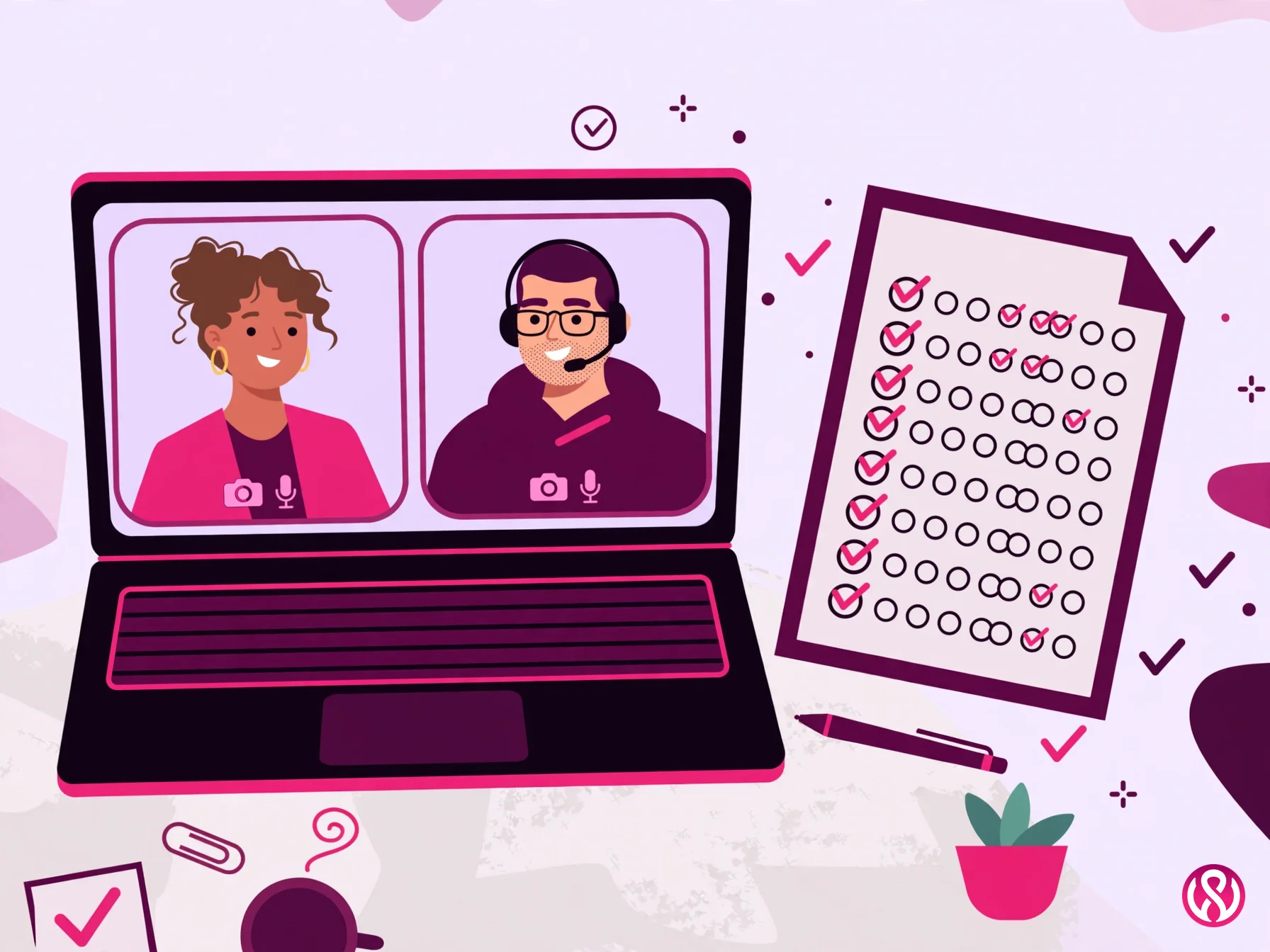
Vetting is a funnel: filter fast on evidence, spend time only on the top three. Ask these nine before you sign anything. A good developer answers all of them in one conversation; a bad one gets vague around question two.
1. Can I see two live sites like mine that you built?
Not screenshots, live URLs. Open them on your phone and your computer, test the forms, and check that the pages load quickly. Reject anyone whose portfolio is mockups only or dead links. Judge developers by live websites they built and by references, not by claims on their own site.
2. What platform will you build on, and why this one for my project?
WordPress fits content sites you edit yourself, Shopify fits stores with real checkout and inventory, and custom builds fit when content does not drive the sale. The answer should match your business, not the developer's comfort zone. A developer who builds everything in one platform regardless of the project is selling convenience, not advice.
3. How do you make pages fast?
Expect specifics: image compression and WebP, caching, and Google's Core Web Vitals thresholds, Largest Contentful Paint within 2.5 seconds, Interaction to Next Paint of 200 milliseconds or less, Cumulative Layout Shift of 0.1 or less. Then verify with PageSpeed Insights on their past sites. Speed is the claim every developer makes and the fewest can demonstrate.
4. Where will my code live, and what do I get on the last day?
The right answer: your repository, admin credentials you own, deployment notes, and a short handover walkthrough. The code should be in your GitHub or hosting account from week one, with the developer invited as a collaborator. Never accept a setup where the developer is the sole owner of anything.
5. Who owns the website, the domain, and the hosting account?
All three must be in your name, and ownership of the code must be in the contract. Under US law, an independent contractor owns the copyright in work they create by default unless a signed written agreement changes that, per the US Copyright Office. Put the ownership terms in writing; rules differ in other countries, so get local advice for significant projects. Our own policy is simple: you own everything from day one, no exceptions.
6. What is included in the quote, and what costs extra?
Copywriting, photography, logo work, and e-commerce features are the extras that surprise owners most. A fixed quote lists the pages, the features, and the revisions included, plus what costs extra. Vague quotes turn into change orders: every small request becomes a new invoice. Ask how a change request mid-project is handled; the good answer is a written scope update with time and cost impact before coding.
7. How do you handle support after launch?
Every launch has bugs. Get a support window in writing, 14 to 30 days of fixes is the fair standard, and ask what ongoing updates and backups will cost afterward. Then ask about a care plan: our website management services guide lists what a real one includes, and the same checklist works when you are judging any provider's monthly offer.
8. Can I speak to one past client?
One ten-minute call beats twenty testimonials. Ask the client whether the developer shipped on time, responded within a day, and documented the handover. A developer with no client willing to talk is a developer with something to hide, or with no real clients at all.
9. What happens if you disappear mid-project?
Expect a backup contact, code pushed to your repository regularly, and documentation sufficient for a takeover. This question sounds dramatic until you inherit a rescue project; half of the rescue work we have seen started with a developer who went quiet in week three. The developers who answer this well are almost always the ones who never trigger it.
The Contract Clauses That Protect You
A one-page agreement beats a handshake and beats a 20-page template nobody reads. These six clauses cover 95 percent of freelance and small-agency web builds. Get them in writing before the first payment.

1. Scope with acceptance criteria
“Five pages” is not a spec. Write what the site must do: visitors book a call, the form reaches the CRM, the checkout completes without errors. Acceptance criteria should be testable by a non-technical person: the homepage loads its main content inside 2.5 seconds on a phone, the contact form delivers within a minute, you can add a news post yourself without calling the developer.
2. Milestones tied to payments
A fair structure is 20 percent kickoff, 40 percent on staging demo approval, 25 percent at launch, and 15 percent retained for 14 to 30 days of bug fixes. Never pay 100 percent upfront, and never accept “pay when you feel happy” as the final term. We split our own projects 50 percent on start and 50 percent on launch, with the scope fixed in writing before either payment.
3. Code and copyright ownership
The contract must state that all code, designs, and content produced under the agreement become your property on payment. Without that sentence, ownership defaults vary by jurisdiction, and in the US the contractor owns the copyright by default. Domain, hosting, repository, analytics, and admin logins must be registered to your email from day one, with the developer invited as a collaborator.
4. Change requests
“Just one small shop section” resets testing and CMS work. Every addition gets a written time-and-cost delta before it is coded. This clause is the difference between a fixed price and a fixed price in name only.
5. Quality targets
Agree measurable targets in the contract: Core Web Vitals thresholds, WCAG 2.2 Level AA accessibility for sites that serve the public, and mobile-first testing on real phone sizes. A contract that defines quality can be enforced; a contract that says “professional standard” cannot.
6. Termination and handover
Either party exits with short notice, you pay for approved work delivered, and the code is already in your repository. This single paragraph prevents most hostage situations. Add it even when everything feels friendly, especially when everything feels friendly.
Red Flags: When to Walk Away
Some signs are negotiable; these are not. Walk away when you see any of them, no matter how good the quote looks.
- No verifiable live portfolio, or examples that turn out to be templates sold as custom work.
- A quote far below the others with no explanation of what is excluded. A $900 bid against a $3,000 to $5,000 cluster means the bidder missed the scope, and the rebuild later costs two to three times the “savings.”
- Full payment demanded upfront, or a refusal to tie payments to milestones.
- Refusal to put the domain or hosting in your name, or to push code to your repository.
- Vague answers about who does the work, how changes are charged, or what happens after launch.
- Pressure to sign today for a “limited discount,” or a contract with no termination clause.
- No interest in your customers or your business goal, only in the feature list. The developer who never asks who the site is for builds sites for no one.
One more that deserves its own line: the developer who cannot explain a past failure. Every developer with a decade of experience has a project that went wrong. The good ones can tell you what broke, what they changed, and what they check for now. The ones who claim a perfect record are either new or not telling the truth.
Why We Belong on Your Shortlist
We are an agency, so take this section for what it is: our own pitch, held to the same standard as everyone else's in this guide. Websloop has designed and built websites since 2015, more than 150 projects, and you talk directly to the lead developer, not an account manager. Every quote is fixed before work begins, every site ships with SEO basics built in, and you own everything from day one.
The proof is in the measured results. Falcon Ridge, a real estate client, saw traffic grow 285 percent with enquiries up 60 percent. Carter Hearing, a healthcare client, grew traffic 180 percent with bookings up 45 percent. M8owes Construction, a Perth builder, tripled its traffic after a Wix rebuild. Hunter Premium Skylights grew traffic 80 percent with enquiries up 55 percent. R Inventive, a Canberra building design firm, saw inquiries rise 40 percent. These are client-measured before-and-after figures, not estimates.
We are also honest about fit. If your project is a custom web application with heavy backend logic, we will say so and point you toward a specialist. If a template and a weekend would serve you better than a custom build, we will say that too; we have talked clients out of bigger projects more than once. The best website developer for your project might not be us, and a consultation that ends with “you do not need us” is still a consultation well spent.
Our website development services cover WordPress, Shopify, WooCommerce, custom builds, redesigns, and ongoing care. Builds start at $799, and you can see every tier on our pricing page before you ever talk to us.
Your Next Step
The best website developer for your business is out there, and now you know how to find them: pick the model that fits your scope, shortlist on live work, vet with the nine questions, and get the six clauses in writing. Do that and you skip the failure modes that burn most buyers: the vanished freelancer, the rented website, the quote that doubled, the launch with no support.
If you want a second pair of eyes on a quote you have received, or a fixed quote for your own project, start with a free 30-minute consultation. We will scope the project honestly, quote a fixed price, and tell you plainly if we are not the right fit. If you are still budgeting, our website design cost guide and our business web design guide go deeper on what drives the price, and our design and management bundle guide covers the ongoing side of the decision.