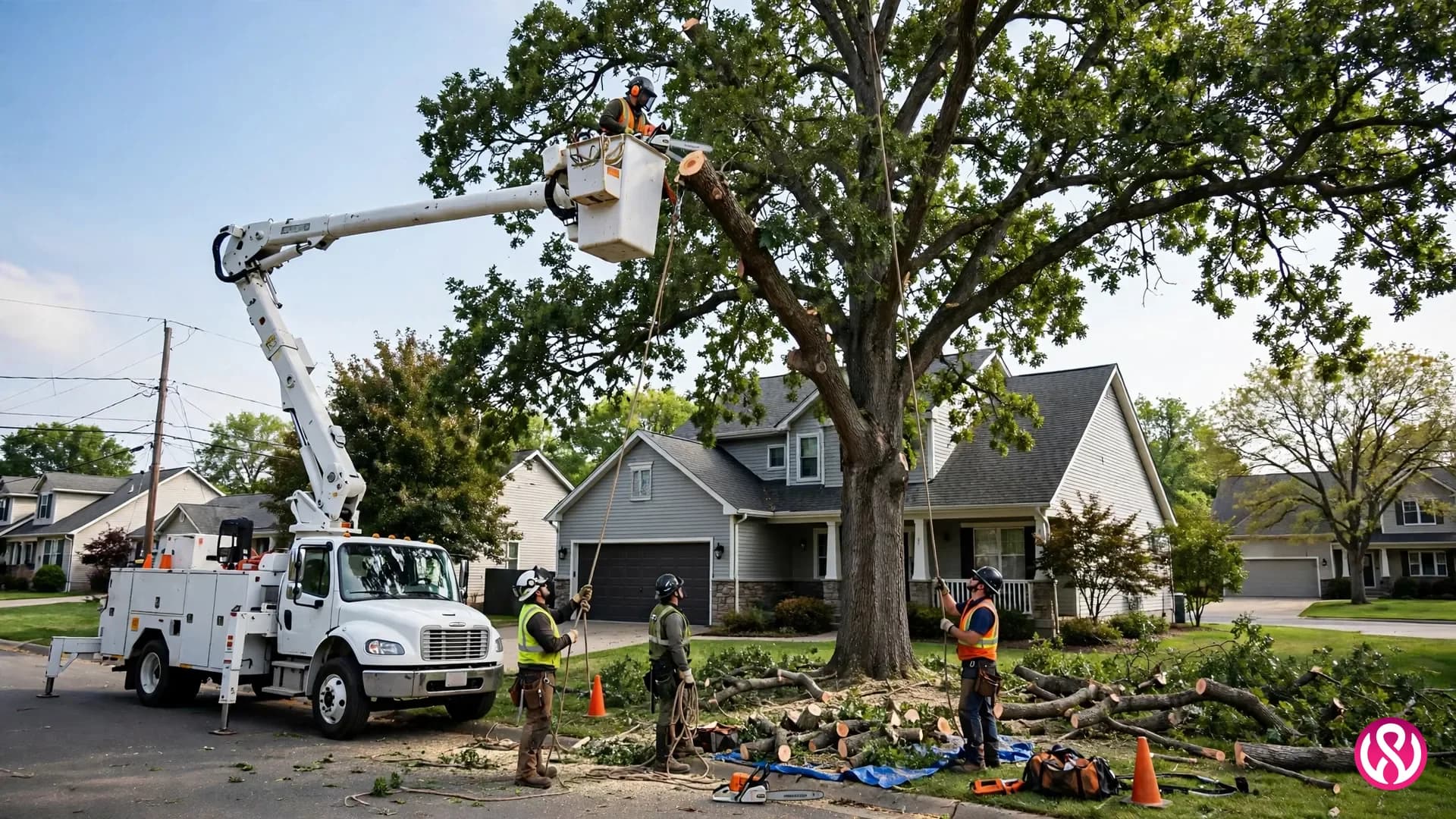
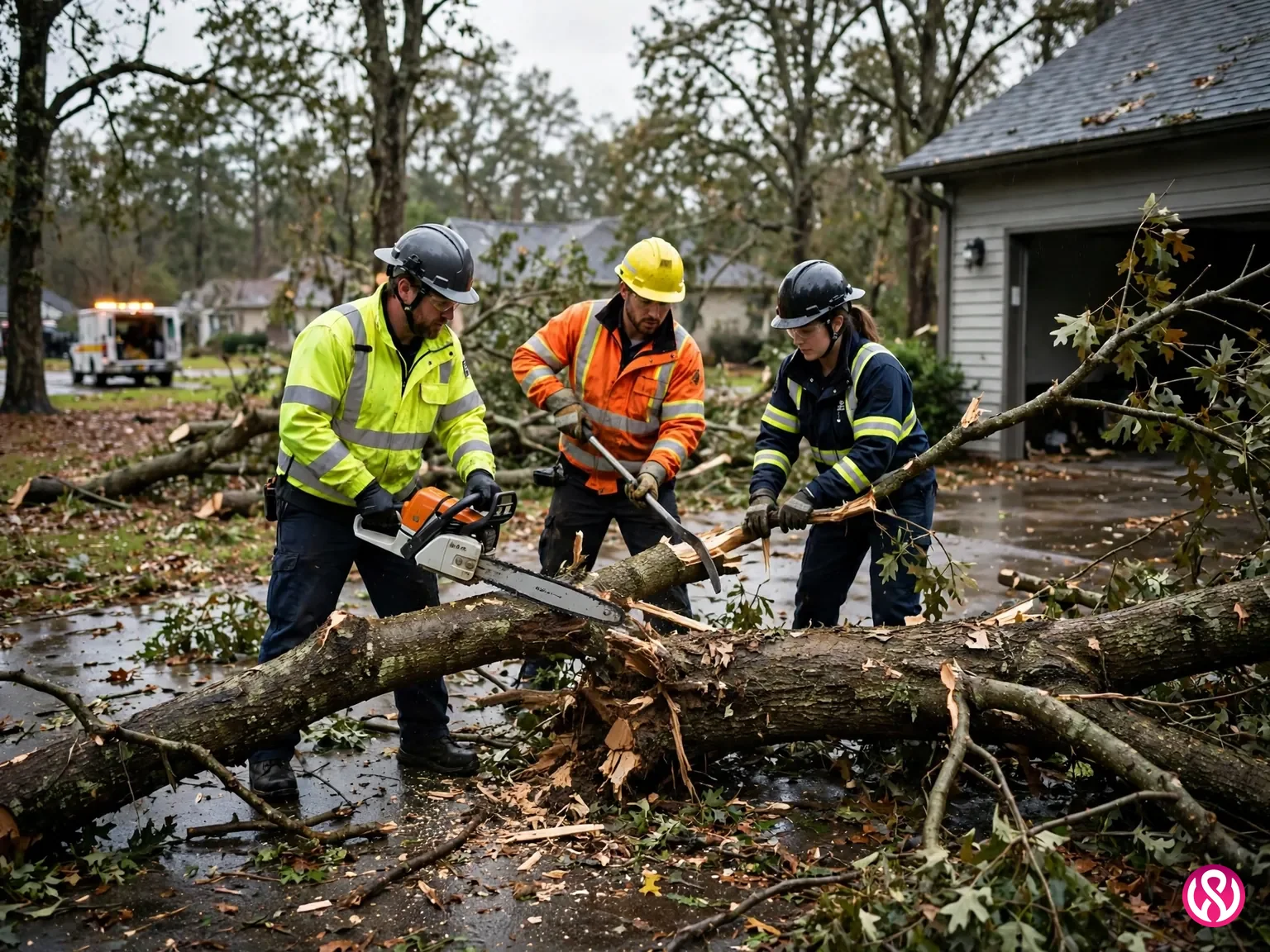
Tree service website design is a website built to turn local searches into booked removals, trimming jobs, and emergency storm calls: a visible emergency number, a photo estimate form, service pages for removal, trimming, stump grinding, and storm cleanup, and local search setup that puts the company in front of homeowners who need help now. It differs from a generic contractor website in one practical way. A tree customer is often dealing with urgency or risk: a storm-damaged limb over a roof, a dead tree leaning toward a house, or a stump blocking a new fence. The site has to answer fast, prove the crew is insured and qualified, and make booking easy on a phone. This guide covers what that site has to do, what it costs in 2026 across every buying model, and the checks that expose a bad provider before you sign.
We have designed and built websites for contractors and trade businesses since 2015, including a rebuild for M8owes Construction, a Perth builder whose organic traffic rose 200%, and Hunter Premium Skylights, a trades installer whose organic traffic rose 80% and inquiries rose 55%. What follows is the honest buyer guide for tree service companies: the anatomy of a site that books jobs, real 2026 price bands with their sources, when each buying model is the right buy, and the questions that expose a bad provider before you sign. Our home services website design guide covers the wider trade market, and our septic service website design guide shows the same buyer-guide method applied to the septic trade.
What Is Tree Service Website Design?
A tree service website design service builds the digital version of your office phone and your crew schedule. Homeowners arrive from a Google search for a tree company near them, check whether you serve their town, look at your services and photos, read a few reviews, and call or request an estimate. Property managers and insurers arrive with different needs: a company that can handle several properties, storm documentation a claim can use, and a booking flow that does not need five phone calls. A generic five-page brochure site cannot carry either visit. It has no emergency storm page, no photo estimate form, no service pages per service, and no service-area pages, which means it answers none of the questions a tree customer actually asks.
The best tree websites are built around three pages that do not exist on ordinary business sites. Service pages carry the real detail: removal, trimming and pruning, stump grinding, emergency storm cleanup, plant health care, and cabling and bracing, each with what is included, how the crew works, and what affects the price. Service-area pages carry the towns and counties you actually serve, so a homeowner two towns over can see at a glance whether you will come to them. Emergency pages carry the storm path: what to do when a tree falls, what the crew needs to know on the first call, and how fast you respond. Everything else on the site, the about page, the reviews, the contact page, exists to support those three. A provider that pitches you a generic services layout with your logo on it has not built for a tree company before.
What Does a Tree Website Actually Have to Do?
A tree website has one job: move a homeowner from a search to a booked job. Tree customers act differently from remodeling clients. A remodeling client compares portfolios for weeks. A tree customer with a limb on a roof wants a crew this week, and a homeowner planning a removal wants a fair quote without a pushy sales visit. Your site is the first call for both, and it has to perform four functions well or the caller moves to the next listing. Visitors who cannot find the number in seconds call the next company.
First, it has to prove you are qualified and insured. Photos of your crew, your trucks, and real job sites carry this, along with plain statements about liability insurance and workers compensation and any ISA certified arborist credentials on the team. Second, it has to answer the two questions every caller asks first: do you come to my town, and what will it cost. A service-area check answers the first. Honest price guidance and a photo estimate path answer the second. Third, it has to let a serious customer take the next step without friction: call from the header on any page, request a photo estimate, or book a site visit. Fourth, it has to capture the customer who is not ready yet, with a seasonal trimming reminder and an email signup, so your office has a list to work instead of a one-time visit.
What Should a Tree Service Website Include?
Start with the emergency path. A storm does not wait for business hours, so the phone number has to sit in the header on every page, tap to call on a phone, with an after-hours path that says plainly what happens when someone calls at midnight. Next comes the photo estimate form, and this is where most tree sites fail. A form that asks only for a name and a phone number tells your office nothing. A good tree estimate form lets the homeowner upload photos of the tree, say which service they need, and note access details like gates, slopes, and nearby power lines. When the form collects those, your office can give a realistic range on the first call instead of playing phone tag for two days.
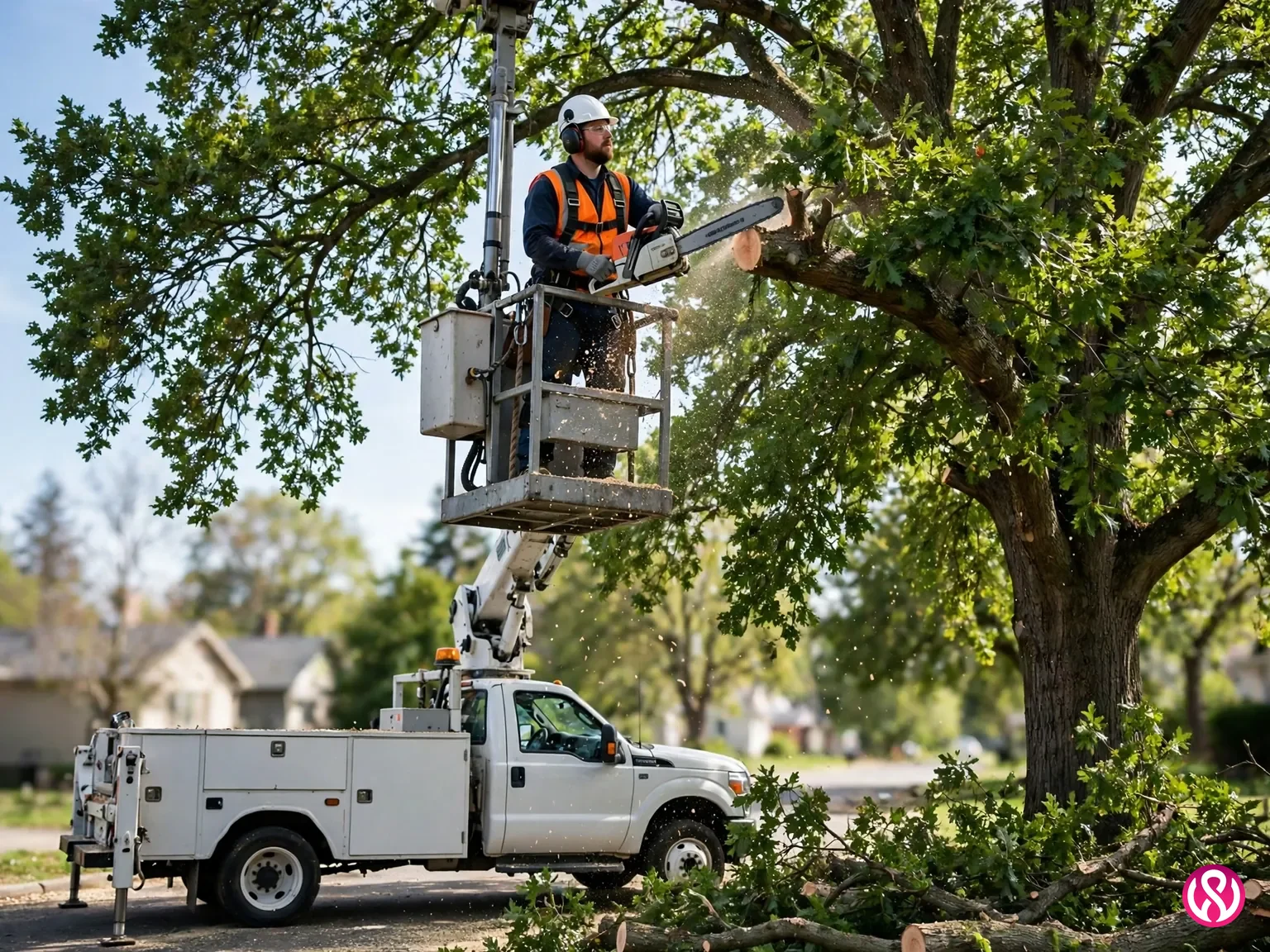
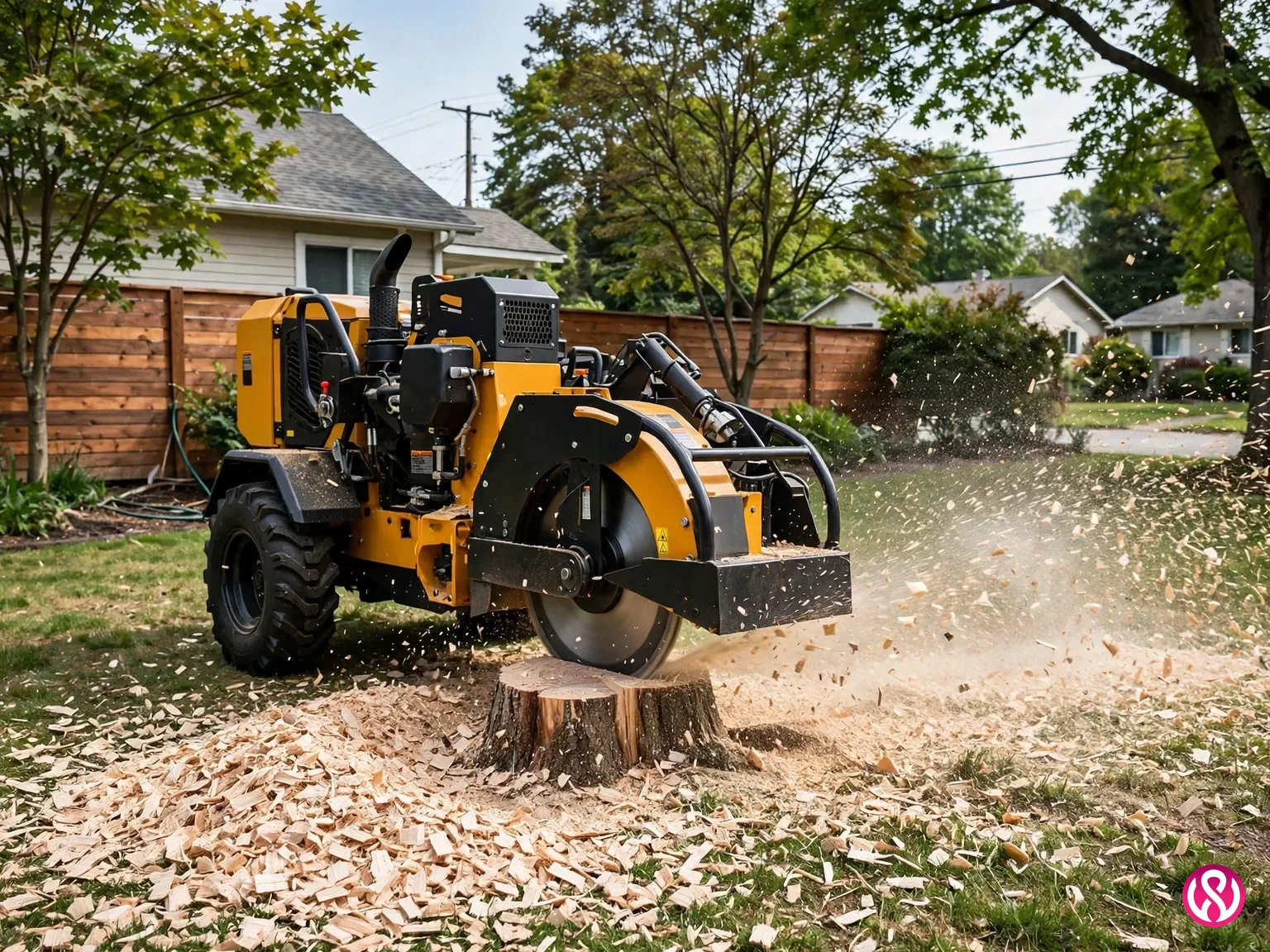
The service pages are the second pillar. Each service needs its own page with real detail, because a homeowner searching for stump grinding and a homeowner searching for emergency removal are two different buyers. Removal pages explain assessment, rigging, and cleanup. Trimming pages explain pruning standards and why topping a tree harms it. Stump grinding pages explain depth, cleanup, and what happens to the roots. Storm pages explain response times and what the crew needs on the first call. Around those pages, the standard pieces still matter: before and after galleries with real job photos, the proof a caller trusts most, reviews on the page and not just on Google, license and insurance details stated plainly, and a frequently asked questions section that answers the questions your office actually hears, like what mistakes cost tree websites calls and whether a homeowner needs a professional designer at all.
Behind the scenes the site needs LocalBusiness and FAQ schema, fast mobile load times, and analytics that track which service page and which town produced each call, because that is how you learn which service is actually selling. Tree work is won town by town, which is why the service-area pages matter as much as the homepage.
How Tree Customers Actually Find You Online
Picture the search as it really happens. A homeowner wakes to a storm-damaged limb on a driveway, searches for a tree company near them on a phone, and opens the map pack, the three business listings Google shows above the regular results. They check star ratings, read two or three recent reviews, and call the first company that looks real and reachable. A WebFX study of 500 home-service searches found the map pack appearing in 488 of them, which matches what every trade owner sees in practice: if you are not in those three listings, a large share of callers never reach your website at all. That is why local search setup belongs in the website project, not as a separate job later. Your Google Business Profile, your name, address, and phone details kept identical everywhere, your service-area pages, and your review flow are part of the site, not extras.
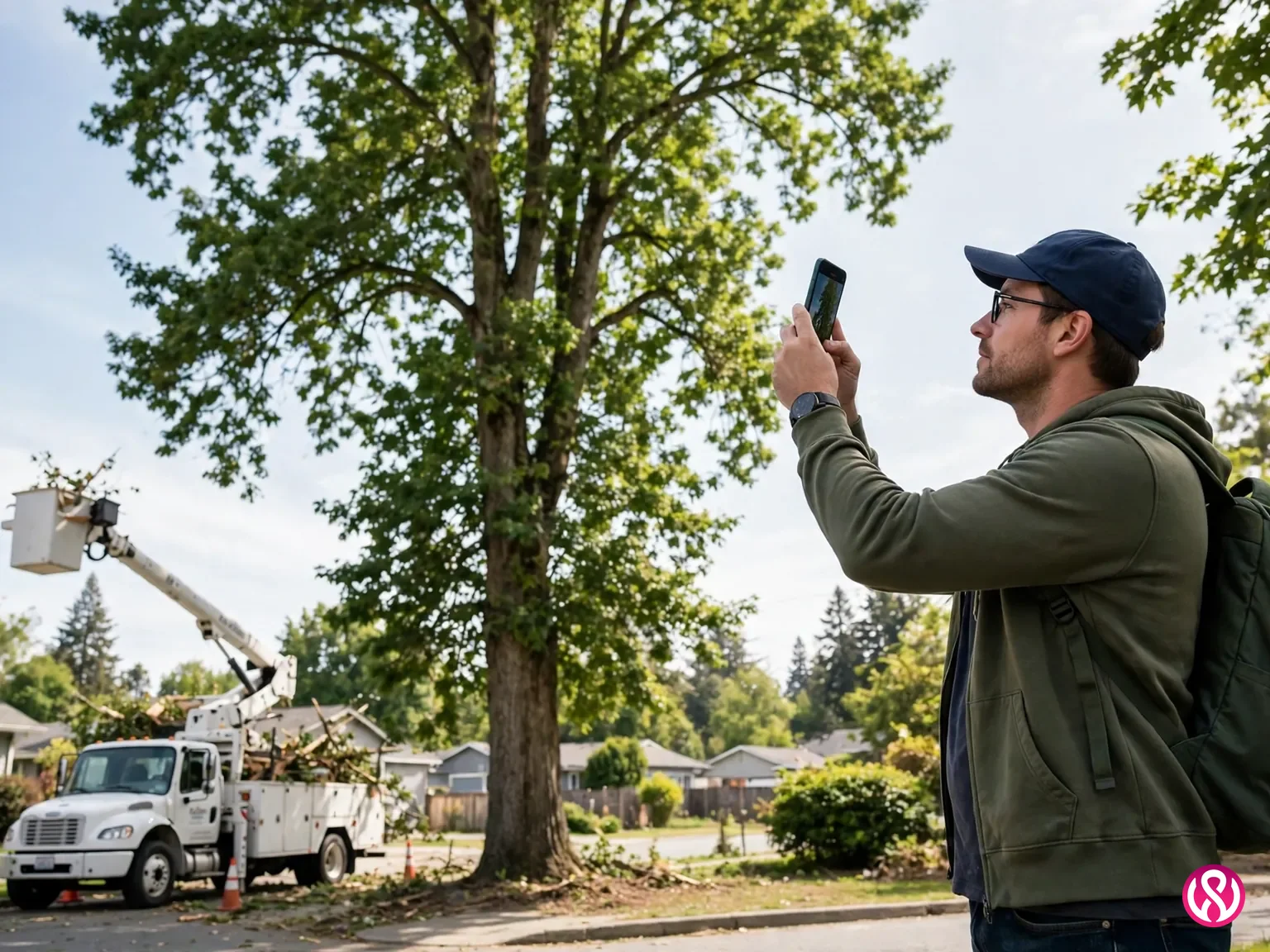
Reviews decide the call more than most owners expect. BrightLocal survey summaries report that 97% of consumers read reviews for local businesses, 68% will only use a business rated 4 stars or more, 47% will not use a business with fewer than 20 reviews, and 74% pay attention only to reviews from the past three months. Treat those as survey summaries, not promises, but the direction is plain: recent reviews with real names and real jobs behind them are the closest thing a tree site has to a referral. Build the review flow into the site: a simple request sent after every completed job, a reviews page that shows the newest ones first, and responses to the unhappy ones that show a real person read them. A site with twelve reviews from 2022 tells a caller nothing. A site with fresh reviews from this month tells them the crews are running.
Speed matters just as much. BrightLocal summaries also report that 73% of local searches start on a mobile device, 75% of consumers decide which business to use in under 30 minutes, and 72% look at three or fewer businesses before deciding. A slow photo gallery or a quote form that fights the caller loses the job to a faster competitor, which is why every build here is held to the Core Web Vitals thresholds Google publishes.
What Tree Website Design Costs in 2026
Published prices for tree websites sit at three levels with a wide gap between them. The DIY builder is the cheapest: Zarla and similar AI builders sell tree sites from $15 to $30 a month plus $10 to $20 a year for a domain, and a template DIY build runs $500 or less. A freelancer or small shop is next: Zarla's cost guide puts a freelancer at $500 to $2,000 for a tree-service site and an agency at $3,000 to $10,000, with the difference coming down to page count, custom features, and whether local search setup is included. Single-operator flat pricing exists too: No404 publishes $2,900 and $4,900 flat packages for tree-service web design in Indianapolis, built around a photo-estimate flow.
That leaves a gap between roughly $500 and $3,000 where most small tree companies actually live, and our ladder sits in that gap on purpose: $799 for a starter site, $1,499 for the professional build most trade companies choose, and $2,499 and up for enterprise scope, every project fixed and itemized in writing before work starts, half on start and half on launch. Care plans run $99, $199 and $399 a month, optional, with no lock-in. When you compare quotes, the number that matters is not the headline price but what it covers: service and service-area pages, the photo estimate form, local search setup, reviews, SEO, and who owns the site at the end. A $15 a month builder site that excludes all of those is not cheaper than a $1,499 quote that includes them. It is smaller.
The Five Ways to Buy a Tree Website
There are five ways to buy, and each one suits a different company. The DIY website builder is the cheapest: a template, an evening, and a monthly subscription. It works for a one-crew operator who needs a placeholder fast, and it fails the moment you need service-area pages, a real photo estimate form, or anything that updates itself. The freelancer is next: a good one builds a clean custom site for a few thousand dollars, and the risk is availability, because your urgent storm-season problem competes with their other clients.
The cheap custom shop sells you a ten-page site for around $1,200 and disappears after launch. Fine if you have someone in-house to run it, dangerous if you do not, because a tree site needs reviews, service areas, and seasonal pages kept current. The mid-market fixed agency, which is what we are, builds the full anatomy for a fixed price with everything itemized, and you own the site outright. The subscription rental, like a hand-coded site from $150 a month with no setup fee, gives you a working site fast and keeps you paying for it forever, which is worth understanding clearly before you sign: leaving means rebuilding, because the site does not run without their system.
That last point deserves emphasis, because lock-in is the most expensive line in any tree website contract and it never appears in the quote. Ask every provider three questions in writing. Who owns the domain, the code, the content, and the customer data if we leave? Can the site run on standard hosting without your platform? What does it cost to export everything, including the estimate history and the review list? A provider that answers all three cleanly is selling you a website. One that hedges is selling you a subscription with a website attached.
Lead Routing: Where Tree Sites Win or Lose
Most tree websites lose the job after the form is submitted. The homeowner requests an estimate, the lead lands in an inbox nobody checks on weekends, and by Monday the homeowner has booked with the company that answered first. The site is only half the system. The other half is what happens to the lead, and the best tree sites are wired into it: form submissions flow straight to the office phone and inbox with the service, the town, and the photos attached to the record, and the customer gets a confirmation that says when to expect a call.
Follow-up is where small companies beat big ones. A seasonal trimming reminder, a short email after a storm job with photos of the finished work, and a review request after every completed job, all of it runs from the same lead data the site collects. When a provider quotes you a tree website, ask what the lead does after the submit button. If the answer is "it emails you," the site is a brochure with a form. If the answer maps the full path from click to call to booked job to reminder, it is a sales system.
Nine Checks Before You Sign
One, clear ownership in writing: the domain, the code, the content, and the lead data are yours from day one, with export terms spelled out. Two, the estimate form workflow: who updates services, prices, and service areas, and how long does a change take. If the answer is "email us and we will get to it," the site will be stale by next storm season. Three, the mobile test: open a service page and submit a photo estimate on a real phone, on a real connection, before you sign. Four, speed: the site held to the Core Web Vitals thresholds Google publishes, largest contentful paint under 2.5 seconds, interaction to next paint under 200 milliseconds, cumulative layout shift under 0.1.
Five, SEO inclusions: technical SEO, schema, and the redirect mapping that protects any rankings you already hold, itemized in the quote, not billed as a second project. Six, lead routing: where each form submission goes, how fast, and what the customer sees as confirmation. Seven, the local search setup: Google Business Profile, service-area pages, and review flow included and named in the quote, not promised for later. Eight, post-launch cost: maintenance, updates, and support priced as a monthly number in writing, optional, with no lock-in. Nine, the exit: what leaving costs and what you keep, in the contract, before the deposit. A provider that answers all nine in writing is worth hiring. One that rushes you past them is telling you something.
Why Tree Companies Pick Websloop
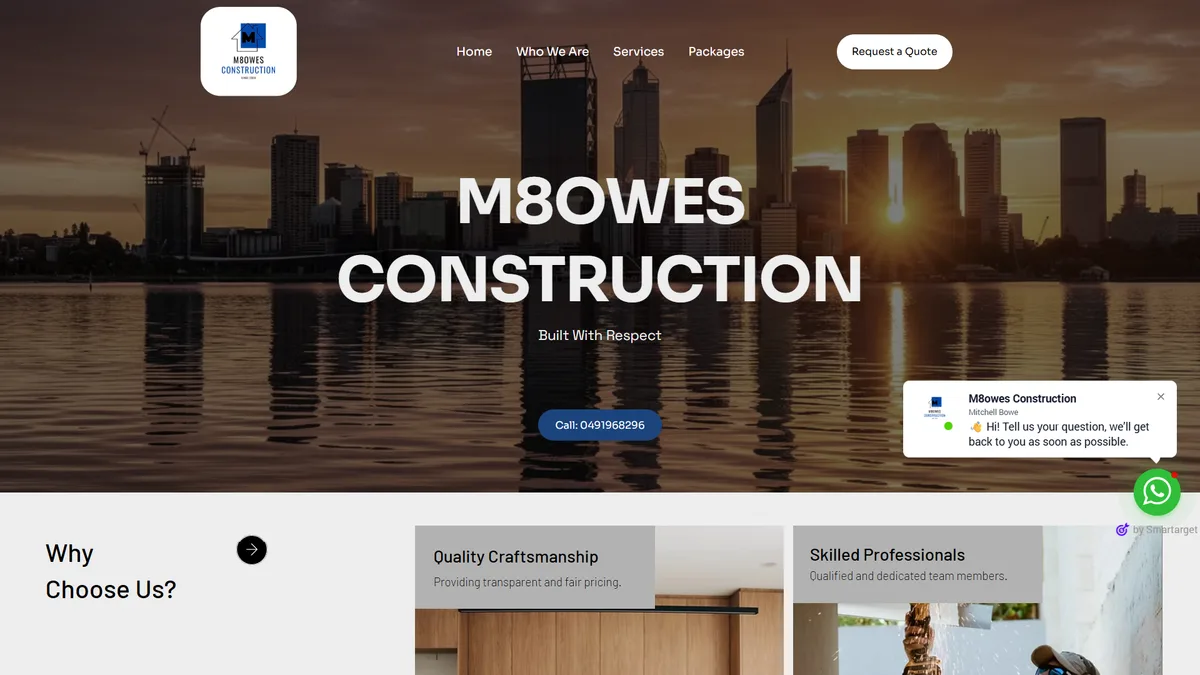
We are not a tree-only agency, and we will not pretend to be one. What we are is a contractor-trade builder with measured results. M8owes Construction, a Perth builder, saw organic traffic rise 200% after a three-week rebuild. Hunter Premium Skylights, a trades installer, saw organic traffic rise 80% and inquiries rise 55%. Carter Hearing, a clinic, saw traffic rise 180% and bookings rise 45%, and Falcon Ridge, a real estate brand, saw traffic rise 285% with enquiries up 60%. Those are measured before-and-after figures from live case studies, not promises. If you are comparing tree service website design side by side, that is the number to ask every provider for.
Every build follows the same rules. Fixed price, quoted in writing before work starts, half on start and half on launch. No hourly billing. You own the domain, the code, the content, and every login from day one. Technical SEO, schema, and Core Web Vitals work are in the quote, not a second project. And the construction website design industry page carries the full commercial offer, while our services page maps the rest of what we build. Our HVAC website design services guide shows the same buyer-guide method applied to the heating and cooling trade.
The Verdict
Tree service website design earns its cost when the site does eight things: shows the emergency number on every page; proves the towns it serves; carries service pages with real detail; collects photo estimates that let the office price the job on the first call; sets up local search and the map pack properly; collects fresh reviews after every job; routes every lead to the office in seconds with its photos attached; and sends seasonal reminders that bring customers back. Buy the DIY builder for speed and low cost if you can live without service-area pages and a real estimate form. Buy the freelancer when a trusted one shows you tree or trade sites they built. Buy the cheap custom shop only if someone in-house will run the site afterward. Buy the subscription rental only when you have read the exit terms. Buy the fixed agency build when you want to own the full sales system outright. Whatever you choose, get ownership, inclusions, lead routing, and exit terms in writing before you pay.
If you want a fixed quote for your own project, start with our free quote. It includes a free 30-minute consultation where we scope the design honestly, and we will tell you plainly if a rebuild is not the right buy for you.